
Practical guides · Pruning by plant type
Pruning roses
When and how much I prune, depending on the type of bush
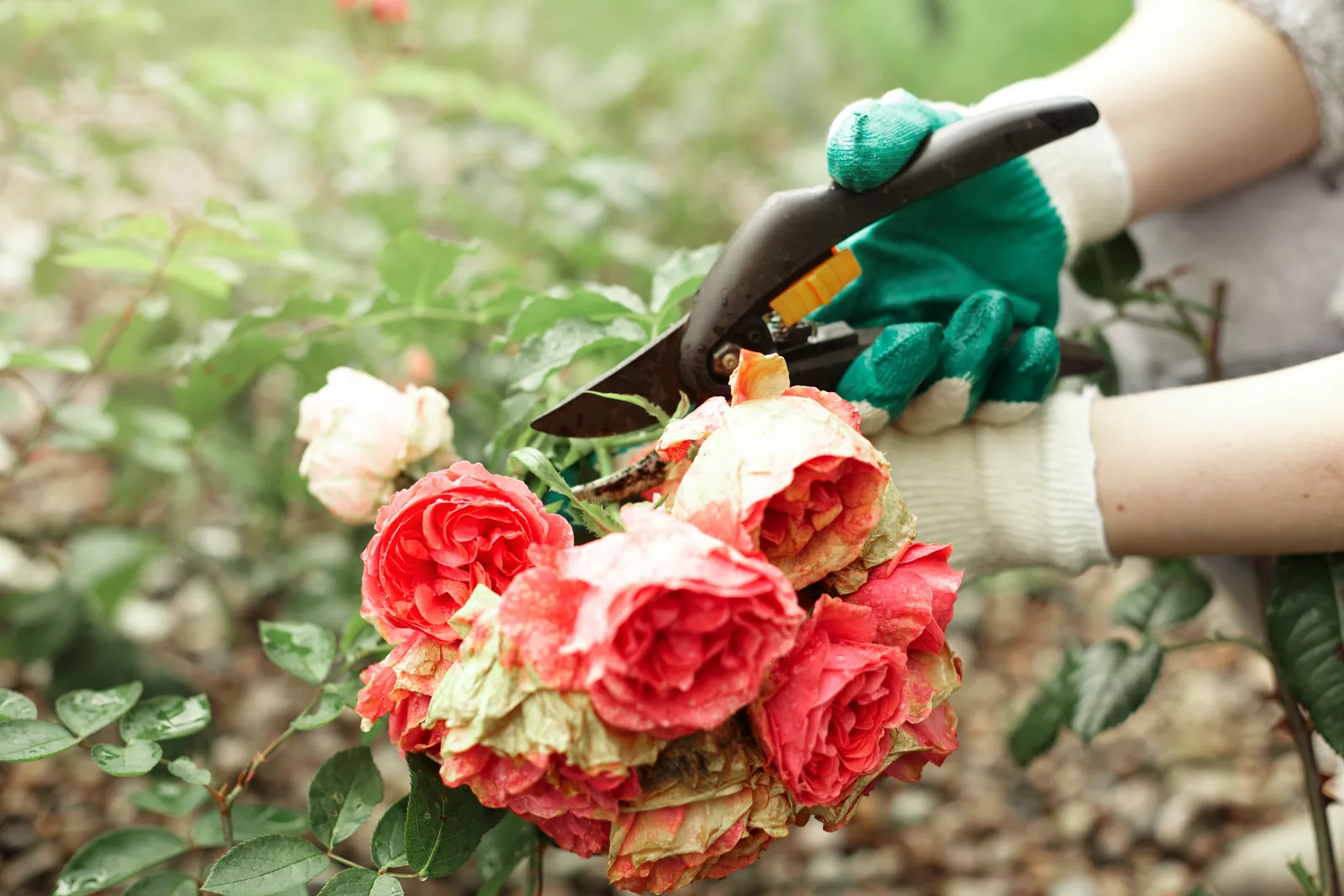
Most of my roses bloom in several flushes. I prune these in spring, usually in April, when the buds start to swell. That’s also when the condition of the wood after the cold season is easiest to see.
I don’t rush after a few warm days, and I don’t automatically take the dates from guides written for gardens with mild winters. In the mountains, the weather is deceptive. In the April task calendar I note the signs I watch for in Bran, Romania.
Before I cut, I look at what type of rose is in front of me: a low bush, a shrub rose, an English rose or a climber. It also matters whether the variety blooms once or several times a year. These are the same questions I start from in the general pruning guide.
In French gardens they say roses are pruned when the forsythia blooms. I like this cue because it follows the weather, not the calendar: in the mountains forsythia blooms later than in the lowlands, and pruning moves along with it. [6]
In short
The right time
When I prune
In spring, when the buds swell; once-flowering varieties, after flowering [1] [2]
First step
What I remove first
Dead, diseased or broken wood and branches that touch [1] [5]
By group
How much I cut
More on hybrid teas, less on floribundas and shrub roses [1] [2]
A clean cut
Where I cut
About 5 mm (¼ in) above a healthy bud, slightly angled [5]
Gear
Tools
Sharp pruners, loppers and thick gloves.
Avoid
What I don’t do
I don’t prune in fall, and I don’t cut every bush to the same height.
Guide calendar for Bran
The months are meant for my garden, at about 770 m (2,500 ft). Each year’s weather can shift them by a week or two.
April
Hybrid teas and floribundas
April
Polyanthas and repeat-flowering shrub roses
March–April
Repeat-flowering climbers
July, after flowering
Once-flowering roses
July–August
Ramblers
June–September
Removing spent flowers
October–November
Gathering diseased leaves
I start with the condition of the bush
First I remove dead or broken wood, then branches that touch or crowd the center of the bush. Frost-damaged canes I cut back to where I see white, healthy pith. With very thin shoots I decide by variety: on some varieties the canes are naturally thin. [1] [5]
With a bush weakened by winter, my first concern is finding healthy wood. A nice shape comes only after that.
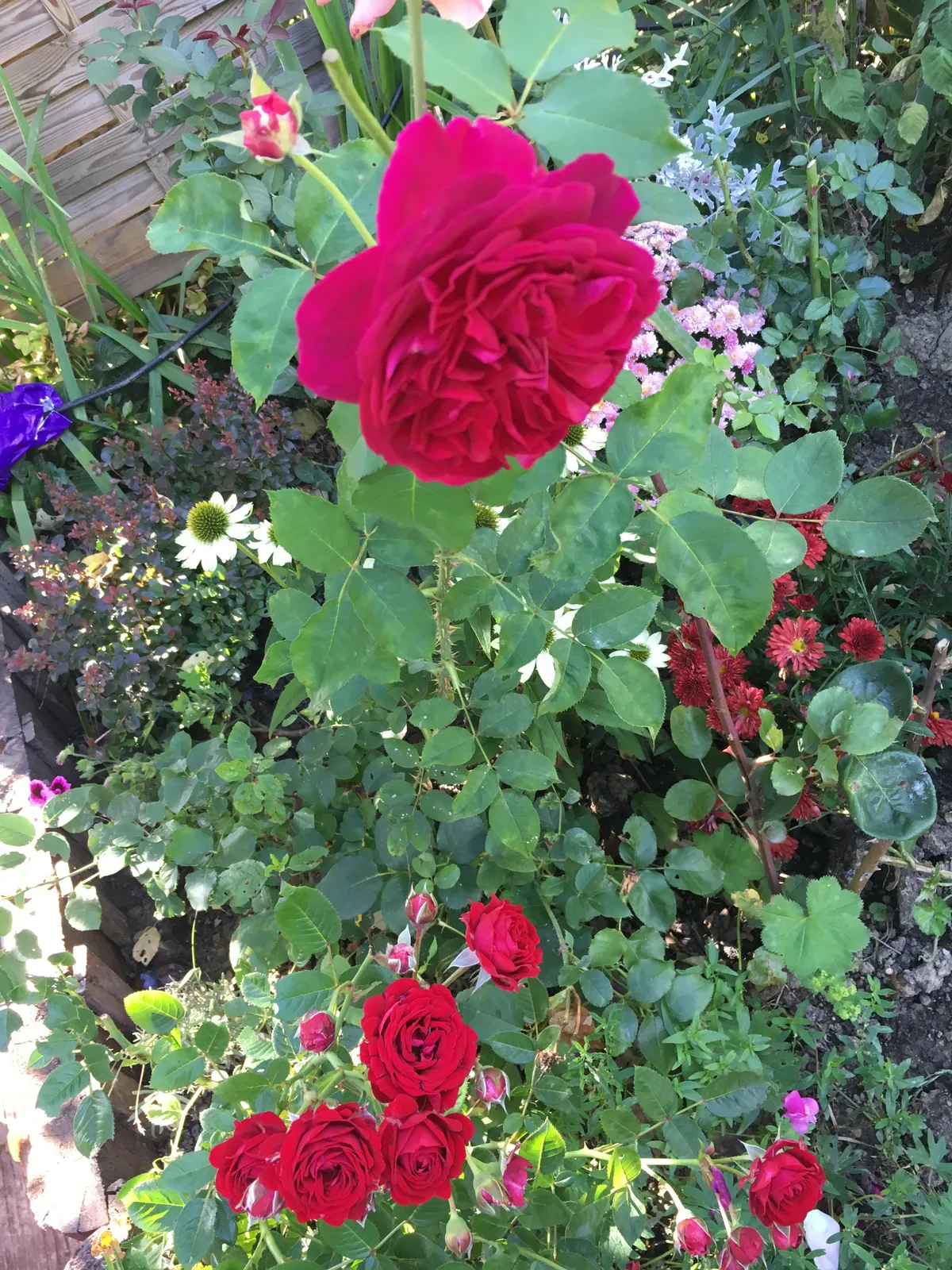
How much I cut, by group
Hybrid teas and floribundas
Both groups handle a spring pruning that triggers new shoots. I cut hybrid teas back more; on floribundas I leave the canes longer so they branch more and make more flowers. I don’t cut every bush to the same height: each one’s age and vigor matter. [1]
Polyanthas and shrub roses
With polyanthas and many shrub roses, I aim for a balanced bush with well-placed canes. I clean up, cut back moderately and now and then remove an old stem at the base, instead of taking the whole bush down to a few buds.
English roses, like Munstead Wood, aren’t trimmed like hybrid teas. I take into account their natural shape and how big I want them to stay. Once-flowering ones are pruned after flowering, so I don’t lose in spring the wood that was going to make flowers. [2]
Climbers need training too
On climbers that bloom several times, I keep the healthy main canes and shorten the side shoots. I train the main canes in a fan or as close to horizontal as possible, because that way they form more flowering side shoots. Ties should support, not strangle. [3]
Ramblers, which usually bloom once, have a different rhythm: I prune them after flowering and keep the young growth that will bloom next year. I don’t confuse them with repeat-flowering climbers just because they also have long canes. [4] For new varieties, like Indigoletta, I note the group and repeat blooming right from planting.
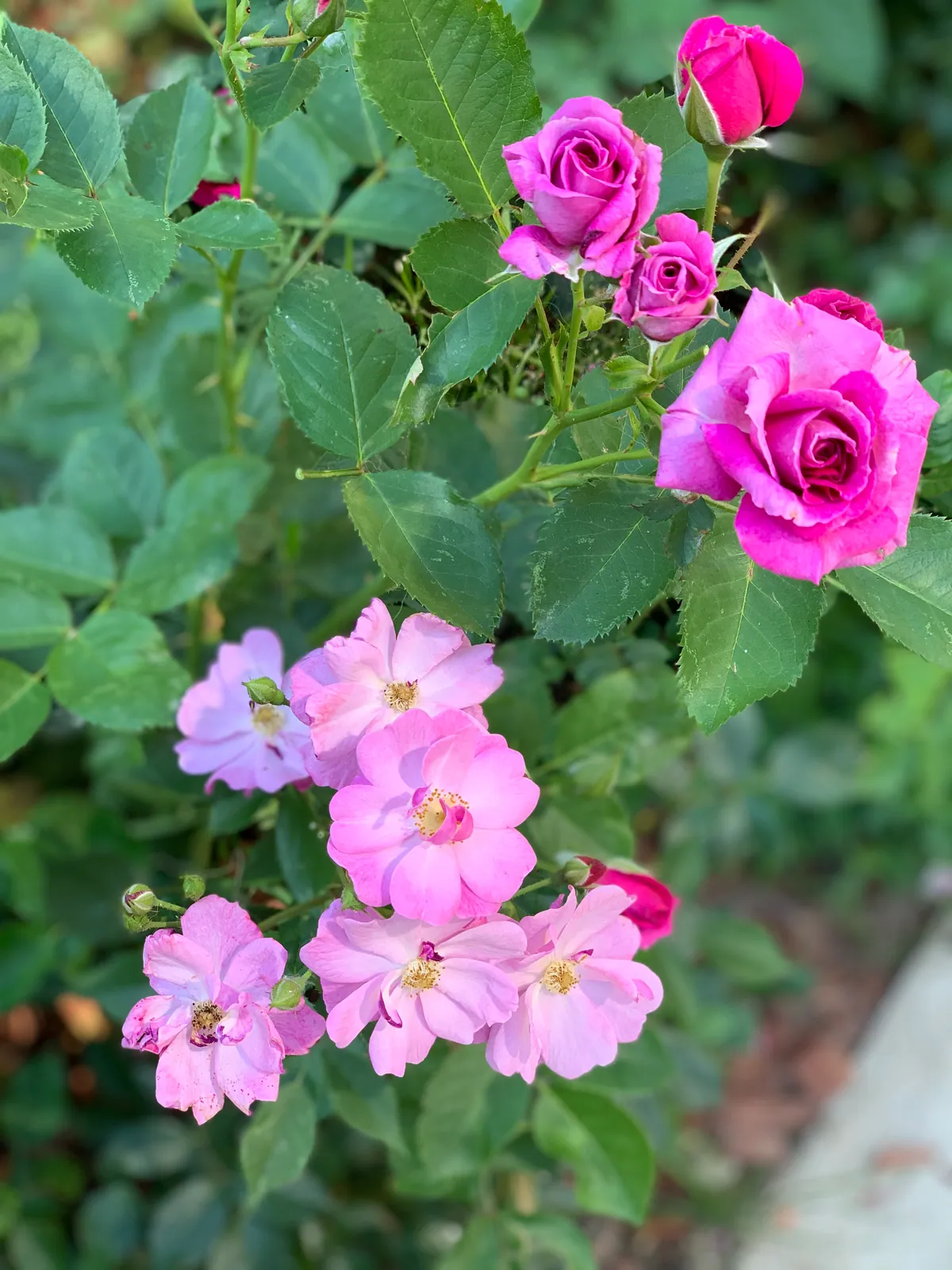
How I make the cut
I choose a healthy bud, usually facing outward, so the center of the bush stays airy. I cut about 5 mm (¼ in) above it, slightly angled, so water runs off. I don’t leave stubs and I don’t damage the bud. A clean, disinfected, sharp blade matters more than the perfect angle. [5]
At the end I look at the bush from a few steps away. It doesn’t need to be cut back hard to be well cared for: I want light, air and room for new growth.
Step by step
- I check the label: what kind of rose it is and how often it blooms.
- I remove dead, broken or diseased wood.
- I remove canes that rub or grow toward the center.
- I shorten the remaining canes, according to the group, above an outward-facing bud.
- I pull off suckers coming from the rootstock, below the graft union. [5]
- I gather the debris and diseased leaves from under the bush.
Common mistakes and what I do
Diagnosis
A climber with lots of leaves and few flowers
Likely cause
Main canes left vertical [3]
What I do
I train them toward horizontal, to develop side shoots.
Diagnosis
No flowers on a once-flowering rose
Likely cause
Pruned in spring, before flowering [2]
What I do
I prune it only after flowering.
Diagnosis
Blackened tips after pruning
Likely cause
Pruned too early, followed by frost.
What I do
I wait for the buds to swell and cut back to healthy wood.
Diagnosis
A dry stub above the bud
Likely cause
Cut too high [5]
What I do
I cut about 5 mm (¼ in) above the bud.
Diagnosis
Shoots with different leaves, coming from low down
Likely cause
Suckers from the rootstock [5]
What I do
I trace them back to the root and remove them.
Diagnosis
Disease spreads from one bush to another
Likely cause
Pruners not disinfected [7]
What I do
I wipe the blade with alcohol between diseased bushes.
Tools and hygiene
The pruners have to be sharp and clean: a smooth cut closes faster than a crushed one. For thick canes I use loppers or a saw and don’t force the small pruners.
When I cut diseased canes, I wipe the blade with 70% alcohol before moving to the next plant, so I don’t carry the disease along. At the end I clean the tools, dry them and oil them lightly so they don’t rust. [7]
What I do with the cut canes
Healthy canes I chop up and add to the compost. Leaves and canes with black spot or powdery mildew don’t go into the compost: I take them out of the garden so I don’t keep the disease near the bushes. More on prevention can be found in the guide to common rose diseases.
Summer pruning after each flush of bloom
Once the spectacular flush of flowers is over, repeat-flowering roses need a lighter touch that helps them bloom again. This summer tidy-up isn’t as drastic as the spring pruning.
- I remove spent flowers. That way I prevent hips from forming and redirect the plant’s energy toward new flowering shoots.
- I follow the first-healthy-leaf rule. I shorten the stem above a compound leaf facing the outside of the bush.
- I clean out weak shoots. I remove dry or diseased shoots, or ones that cross and block the light.
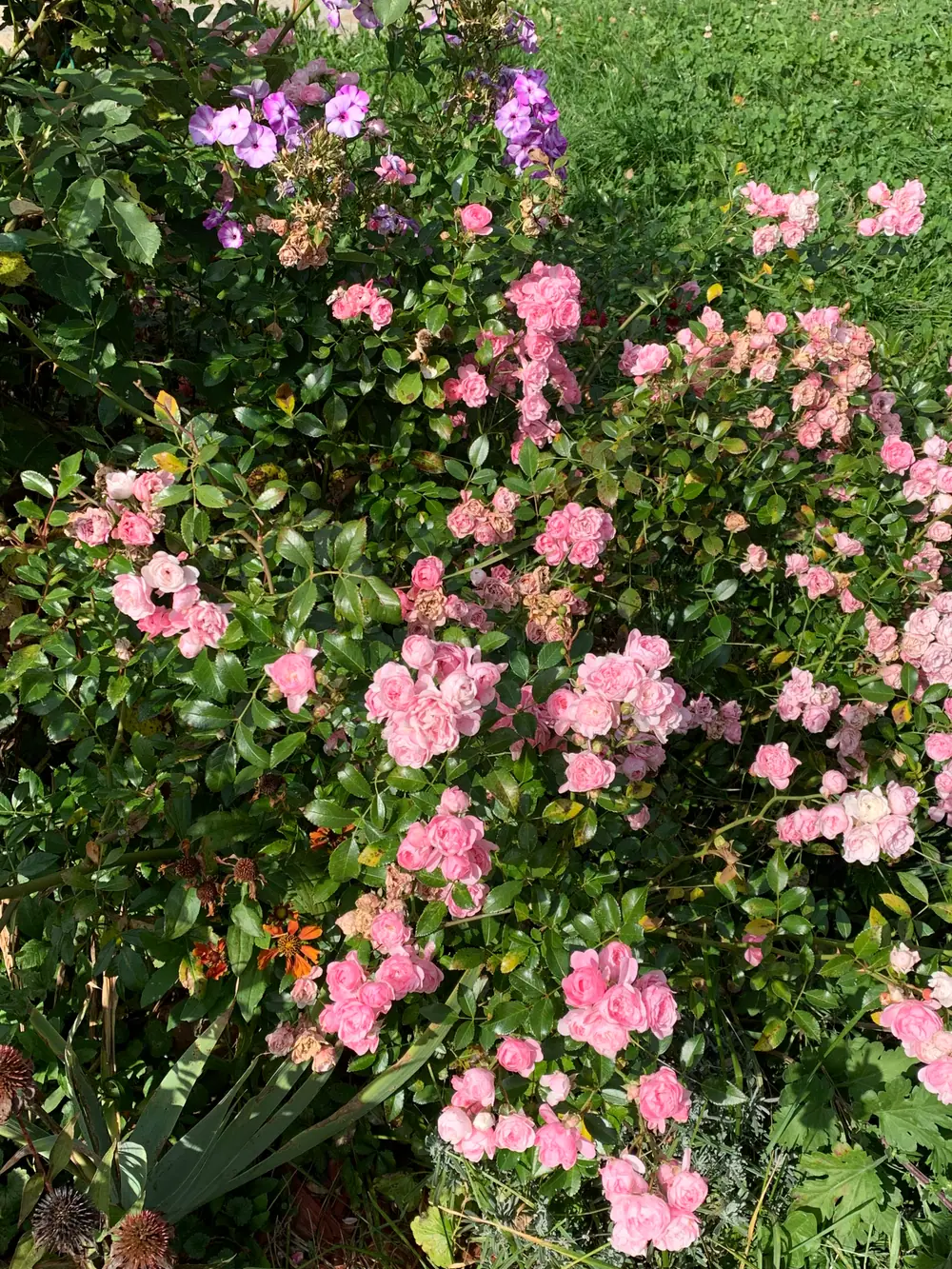
With careful work after each flush of bloom, the bush keeps its vigor and can keep flowering into fall.
In my garden
I have more than 80 bushes from different groups, so I don’t prune them all the same way. In the rose library I’m gradually adding notes on each variety, and the story of the garden is in my rose collection.
In the garden
Hybrid teas
When I prune
April
In the garden
Polyanthas
When I prune
April
In the garden
Bedding and landscape roses
When I prune
April
In the garden
English roses
When I prune
April, lightly
In the garden
Repeat-flowering climbers
When I prune
March–April; I keep the main canes and shorten the side shoots [3]
In the garden
Ramblers and once-flowering varieties
When I prune
After flowering; I keep the young growth that will bloom next year [4]
Checklist
- I waited for the buds to swell.
- The pruners are sharp and clean.
- I removed dead, broken and diseased wood.
- I cut back each group according to its type.
- I left once-flowering roses unpruned.
- I checked the climbers’ ties.
- I gathered the diseased leaves from under the bushes.
Further reading
- RHS — Rose pruning: floribunda and hybrid tea roses
- RHS — Rose pruning: shrub roses
- RHS — Rose pruning: climbing roses
- RHS — Rose pruning: rambling roses
- RHS — Rose pruning: general tips
- SeLoger Édito — Rosiers: quand et comment les tailler
- Jardiner Malin — Caring for garden tools
I’ve adapted the advice from these sources to my mountain garden. The weather, the plant and its condition matter more than the month on the calendar.