

Seasonal journal · Summer
Roses after the rain
The beauty of wet flowers and the care they need
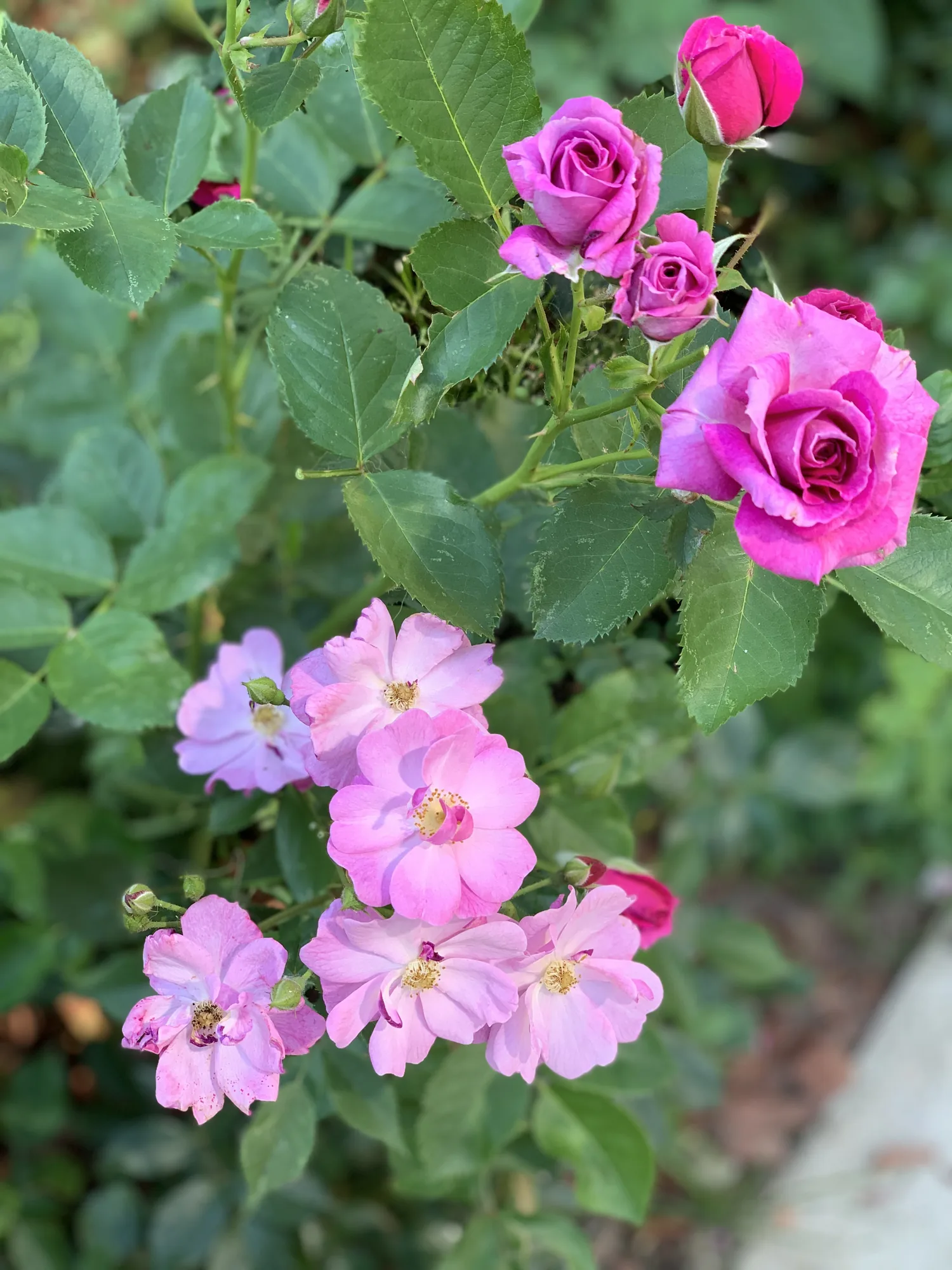
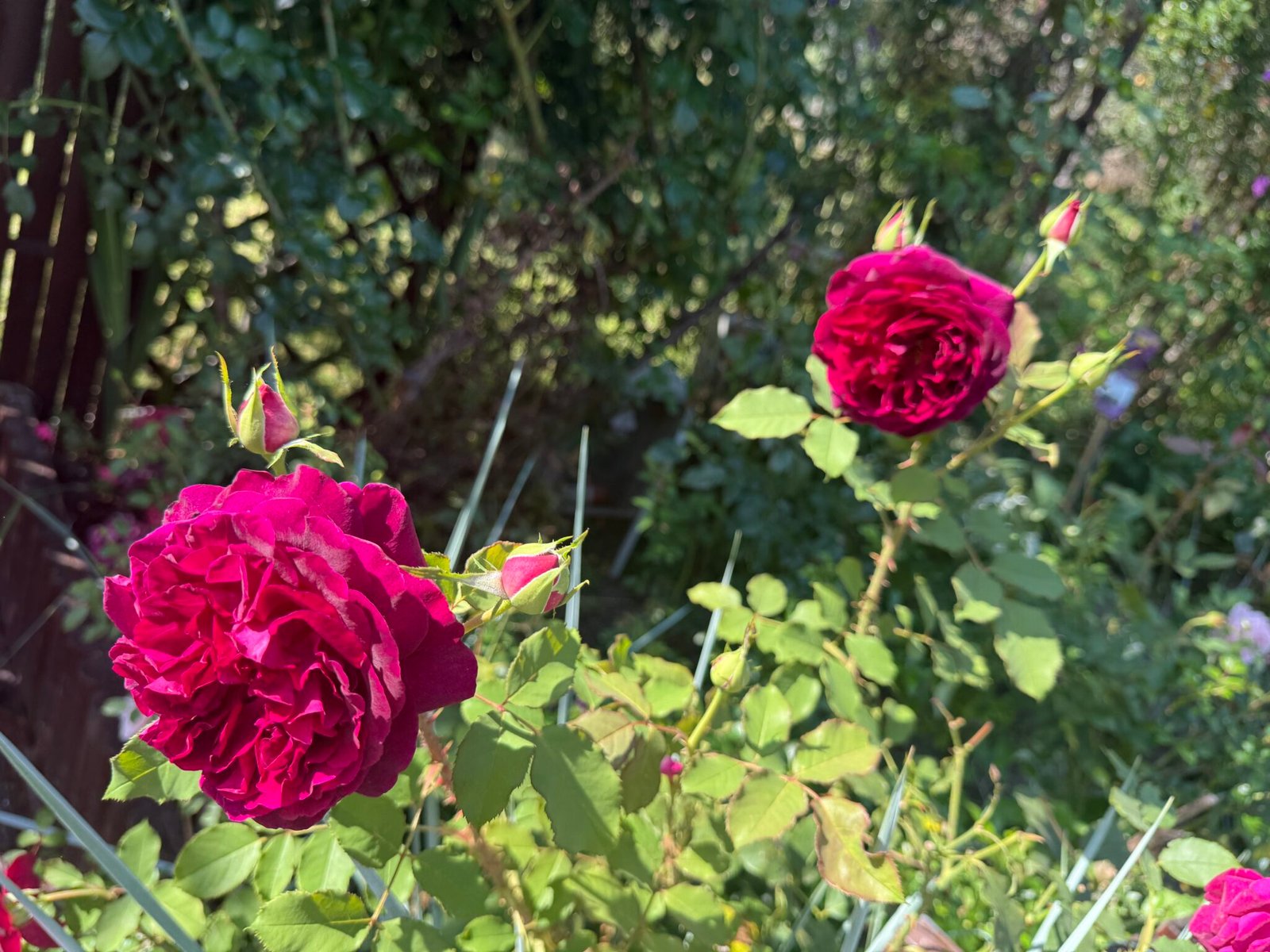
There’s a magic hour after a summer rain stops when the garden seems to me at its peak. The air is fragrant, the colors look deeper and the raindrops sit on the petals like tiny lenses.
I try to capture these moments in photos, because I know how quickly everything can change. After rain, the scent seems stronger to me. But beyond the beauty, long spells of rain make me pay closer attention to the leaves, the buds and the soil around the bushes.
01
Prolonged moisture encourages some diseases
Not every rain brings disease. The risk depends on how long the leaves stay wet, how susceptible the variety is, the temperature and whether the disease is already present in the garden. A leaf that dries quickly is in different conditions than one that stays wet overnight and then meets a foggy morning.
Black spot is encouraged by persistent moisture. The spores can spread through splashing water, and symptoms appear after a while, not necessarily right after the rain. There’s no number of hours I can use as a guarantee that the plant is or isn’t safe.
Gray mold can affect flowers and buds, especially when the tissue stays wet and is already damaged or aging. Browned petals alone, however, don’t make the diagnosis certain. Rain can also cause damage without an infection.
Clearing away diseased debris and good air circulation reduce some of the risk. Mulch can limit soil splashing onto the leaves, but it isn’t a complete barrier against disease. I also leave some open space around the base of the stems.
02
Buds that won’t open
After long rains, some flowers stay closed. The outer petals, wet and then dry, can stick together into a shell that keeps the flower from opening. This is known as flower balling and isn’t, in itself, a fungal disease.
Some varieties with many thin petals are more vulnerable, including some English roses, but not all varieties react the same way. A balled bud can later be colonized by fungi, especially if it stays wet for a long time.
If the bud is still firm and healthy inside, the stuck outer petals can be peeled away very gently. I don’t force it open. Soft, browned or moldy buds are removed. In the long run, an airy spot and morning sun can help the flowers dry faster.
03
What I look at after the rain
- I check the flowers heavy with water and the shoots that have bent over. If I shake a flower, I do it very gently, supporting the shoot, without damaging the petals.
- Once the surface of the plants dries off, I remove spent flowers and petals stuck to the leaves. I avoid working among bushes that are still wet unless I have to.
- I look at the lower leaves, but also at the rest of the plant. Spots don’t necessarily appear only at the base. Removing diseased leaves can help, without turning every spot into a reason to strip the bush.
- I check the ties on the climbing roses. They should support the shoots without strangling them or letting them rub against the support.
- I check whether the water has soaked into the soil. A short shower can wet the surface without moistening the root zone enough.
I come back to the plants over the next few days. A close-up photo of a suspicious leaf, followed by one of the whole bush, can help track how it develops and help when asking for a diagnosis.
04
Treatments aren’t repeated automatically after every rain
First I identify the problem; if I’m not sure what it is, I clear that up before choosing a product. Then I follow the label of the approved product: the dose, the rain-free interval, the time between applications, the maximum number of treatments and the protective measures. Rain isn’t a reason to shorten these intervals.
The steps for checking and the rules for treatments are in the guide Pests and diseases.
05
When the problem reaches the roots
After a rainy week, my clay soil shows its difficult side. When water fills the soil pores for a long time, the roots get too little oxygen. The plant can stall, turn yellow or even wilt, even though the soil is wet.
These signs can have other causes too. That’s why, before watering, I check the moisture a few centimeters (an inch or two) down, being careful of the roots. I don’t decide based on the dry look of the surface crust or on a fixed number of days since the last rain.
Yellowing doesn’t automatically mean fertilizer needs to be added. Rain can wash away some of the soluble nutrients, but roots stressed by excess water can struggle to use the nutrients already there. The priority is for the soil to drain and the plant to recover; fertilizing comes after assessing the need, not as a reflex.
Spots where water pools again and again are worth watching separately. Organic matter can improve soil structure over time, but it doesn’t solve every drainage problem. Sometimes you need to look at runoff, compaction or the choice of location. A raised bed can be a solution for a new planting, without burying the base of existing plants any deeper.
06
The joy of a rain-washed garden
Rain remains a precious resource. Collected rainwater can be used in the garden if the containers are suitable and well maintained, but its quality also depends on the collecting surface and how it’s stored. Tap water isn’t unsuitable by definition either, and rain doesn’t replace fertilizing when it’s needed.
Beyond all the checks, there’s the image that draws me out of the house: leaves washed clean of dust, light returning through the clouds and roses still covered in drops. I want to care for them without losing the very joy I planted them for.
What do you notice after a long rain? Write to me in the comments, I’d love to know.
Further reading: RHS — rose black spot · RHS — flower balling · RHS — waterlogging in the soil.