
Shrubs · My garden in Bran, Romania
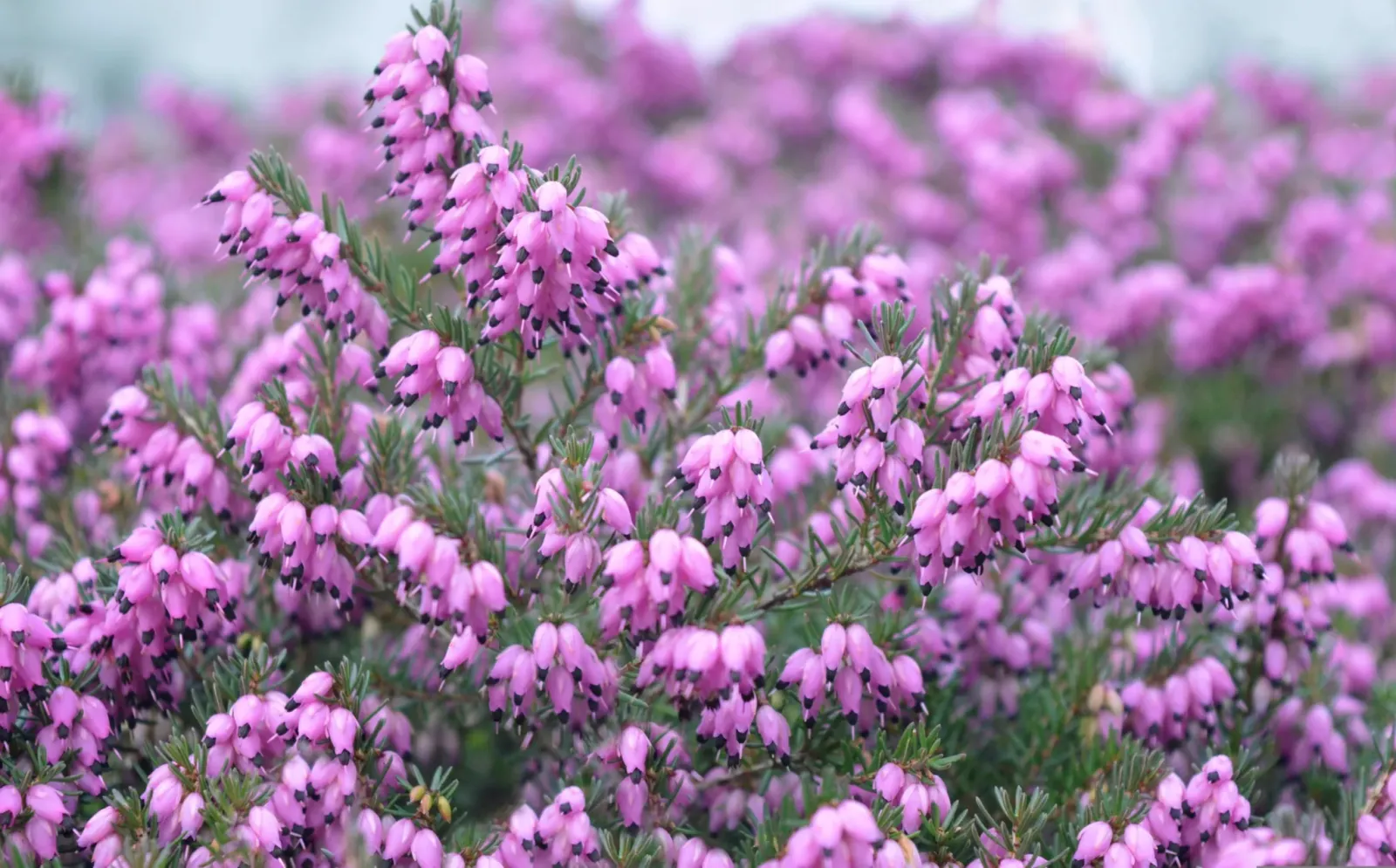
Winter heath in my mountain garden
Erica carnea: flowers in winter and early spring
Erica and calluna look very much alike, and I grow both in my garden in Bran.
I buy them at Hornbach, but not every plant takes. The secret is planting them in early fall, while the weather is still warm, and watering them generously after planting.
The heaths that make it in my garden bloom from November to March–April. The ones that survive grow very well, both in part shade and in sunny spots. I haven’t managed to propagate them.
Below I’ve gathered how I tell erica and calluna apart, how I plant them, and what the sources say about care and propagation. Calluna has its own separate page.
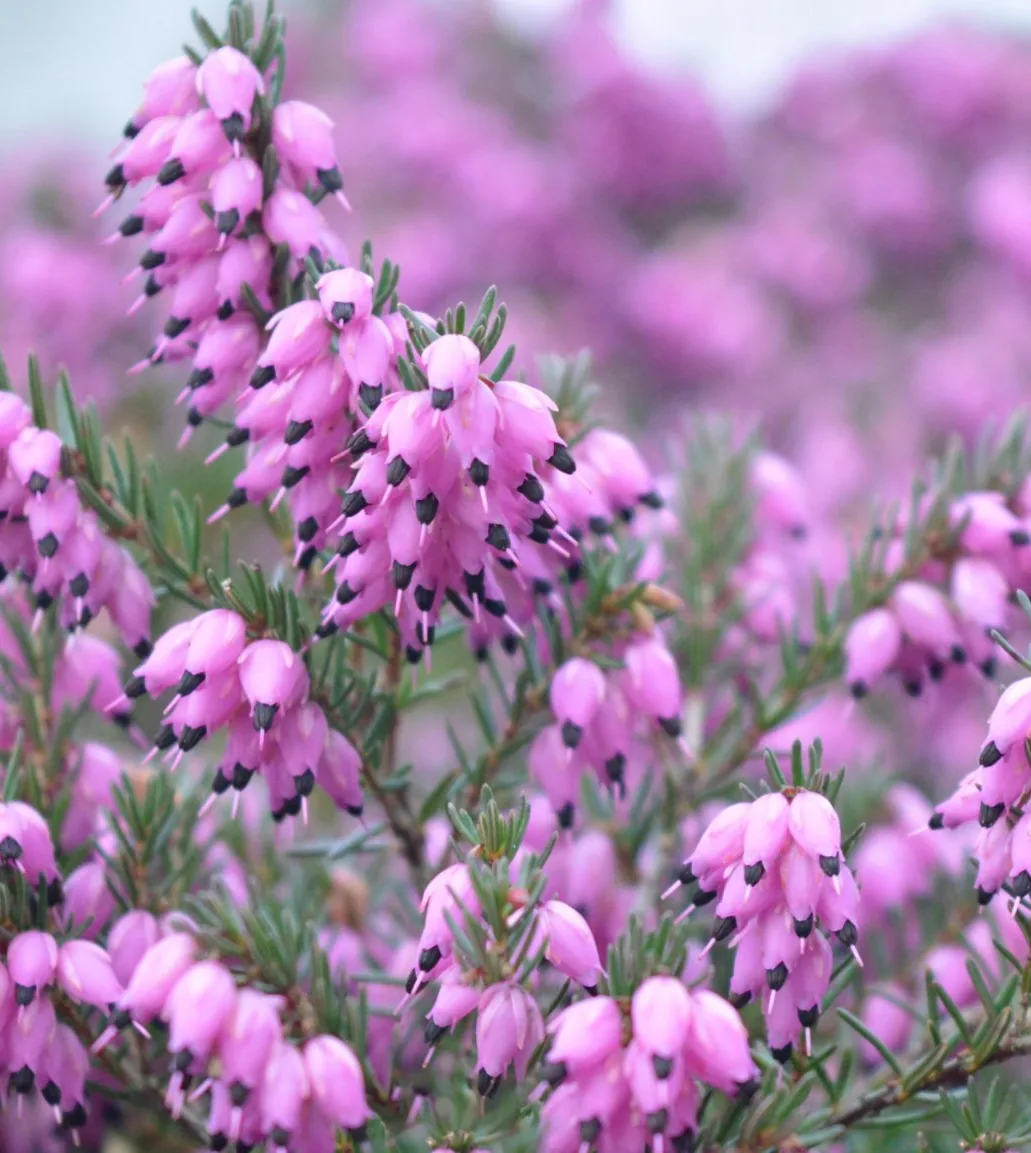
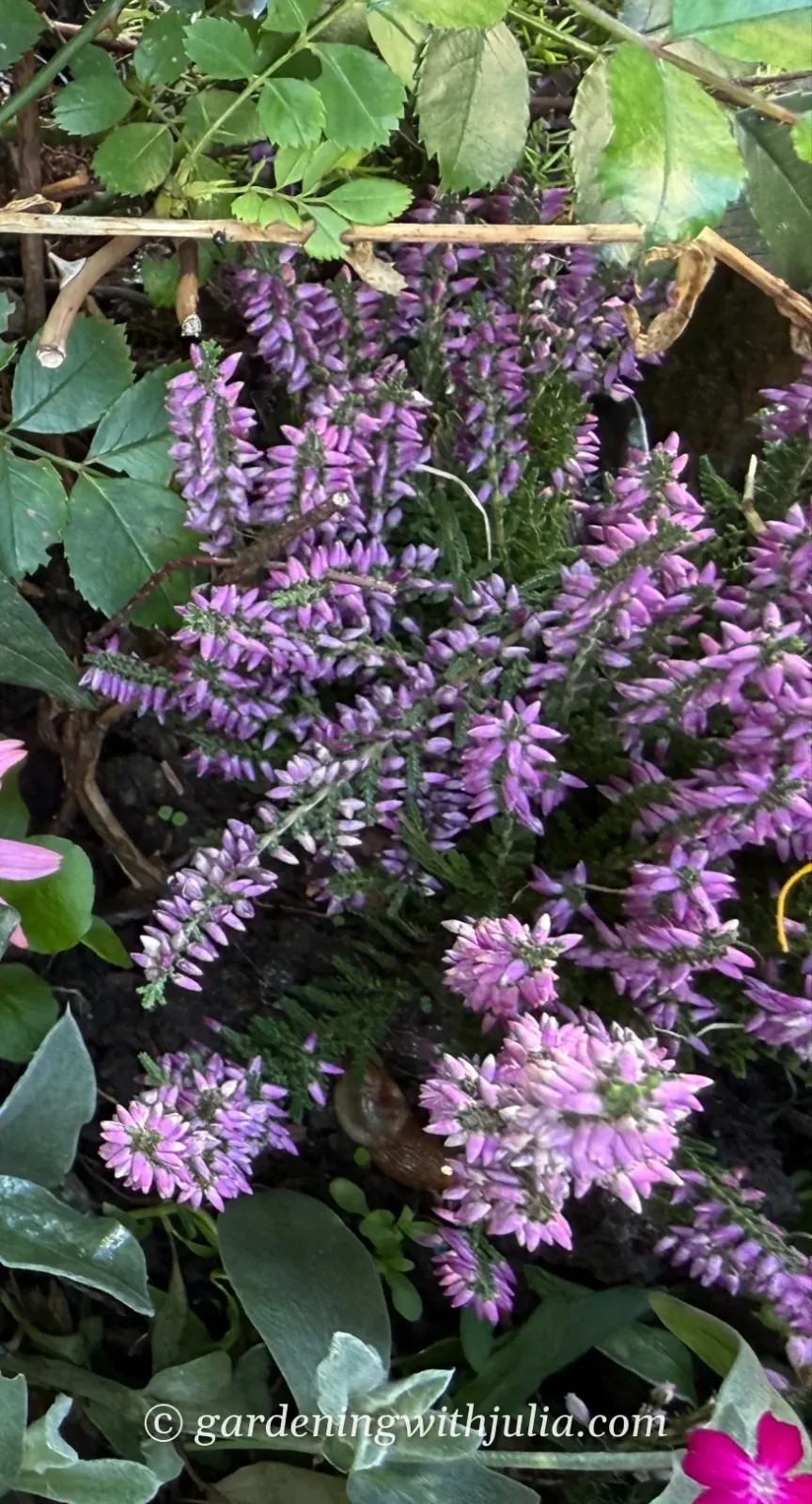
Winter heath flowers, up close · calluna from my garden, for comparison
Heath or heather? How I tell them apart
On a phone, swipe the table to the left.
| Feature | Winter heath (Erica) | Heather (Calluna) |
|---|---|---|
| Leaves | Narrow and needle-like, up to 1/3 inch (8 mm), 3–4 around the stem [7, 8] | Tiny, under 1/8 inch (3 mm), in opposite pairs [8] |
| Flowers | Little bells with dark anthers sticking out of the flower [6] | Small, in spikes; sometimes double [8] |
| Bloom | Winter and early spring [2] | Summer to fall [3] |
| Soil | Acid, neutral or alkaline, with plenty of organic matter [1] | Acid, pH 6.5 or lower, ideally 5.5 [1] |
| Cold | Erica carnea: about -4 to 5 °F (-20 to -15 °C) [2] | Below -4 °F (-20 °C) [3] |
The two look very much alike and are often sold side by side. The surest sign is when they bloom: winter heath flowers in winter and early spring, calluna from summer to fall. When you buy them, the species is also printed on the label. [2, 3]
Good to know about winter heath
01
Flowers in the middle of winter
Erica carnea blooms from late winter into early spring. The buds form as early as the fall, and the flowers last for several months. [2, 7]
02
Dark tips
The flowers are little bells, and their dark anthers stick out of the flower. Up close, they look like tiny black tips. [6]
03
Needle-like leaves
The leaves are narrow and needle-like, up to 1/3 inch (8 mm) long, set in fours around the stem. [7]
04
Fine in alkaline soil too
Erica carnea and Erica × darleyensis grow in acid, neutral or alkaline soil, as long as there’s plenty of organic matter. Calluna, on the other hand, needs acid soil. [1]
05
Hardy to cold
The RHS rates Erica carnea H6: hardy to about -4 to 5 °F (-20 to -15 °C). The hybrid Erica × darleyensis ‘Darley Dale’ is rated H5, about 5 to 14 °F (-15 to -10 °C). [2, 4]
And something more
Made for cold spots
Heaths and heathers are tough plants, generally trouble-free and particularly suited to cold sites. [1]
How I plant winter heath
My secret is planting them in early fall, while the weather is still warm. After planting, I water them thoroughly.
Winter-flowering heaths are sold from the fall onward as winter bedding. They’re planted in free-draining soil with plenty of organic matter. [1]
They’re planted deep, with the lower leaves resting on the soil. If the roots are circling the pot, they’re teased out or the root ball is scored, so they grow out into the surrounding soil. [9, 10]
Most newly planted heaths are lost because they dry out. That’s why they’re watered regularly for the whole first year; once they’re established, they’re fairly drought tolerant. [1, 9]
A layer of acidic mulch, such as composted pine bark, at least 2 inches (5 cm) deep, laid between November and February, holds moisture and keeps weeds down. It’s topped up every year. [1]
Care: pruning and propagation
Heaths need little care: mulch topped up every year and a light trim after flowering. Old plants turn woody and don’t recover well from hard pruning, so after a few years it’s simpler to replace them. [1]
Pruning
Erica carnea is trimmed after flowering, with shears, just on the faded flowers, no later than May. Heather World suggests trimming every other year, in April or May. [2, 10]
Propagation
I haven’t managed to propagate them. The easiest method is layering: in spring, the lower stems are pegged down into the soil and form roots in about 9–10 months. Heaths can also be grown from 2-inch (5 cm) semi-ripe cuttings, taken in July–August and kept in the shade for 8–12 weeks. [1, 10]
The winter heath year
Winter heath is a small evergreen shrub. In my garden, the flowers appear in November and last until March–April. [2]
The calendar at a glance
On a phone, swipe the table to the left.
| When | Task | Why |
|---|---|---|
| Early fall | I plant while it’s still warm and water thoroughly | That’s how they take for me |
| November–February | Acidic mulch, at least 2 inches (5 cm) deep | Holds moisture [1] |
| November–April | Bloom | That’s when my heaths flower |
| April–May | A light trim of the faded flowers | No later than May [10] |
| Spring | Layering: I peg the lower stems into the soil | The easiest way to propagate [1] |
| July–August | 2-inch (5 cm) semi-ripe cuttings | They root in 8–12 weeks [1] |
| The whole first year | Regular watering | Drying out kills most new plants [9] |
Winter in the mountains
Erica carnea comes from the mountains of central and southern Europe and handles cold well. With new plants, the main thing is not letting them dry out. [2, 9]
What I’ve learned in Bran
I buy my heaths at Hornbach, but not every plant takes.
I plant them in early fall, while it’s still warm, and water them thoroughly.
The ones that survive grow very well, both in part shade and in the sun, and bloom from November to March–April.
I haven’t managed to propagate them.
Problems and pests
Heaths have few problems. The main disease is Phytophthora root rot, especially in warmer climates, and the main pests are rabbits and deer. [1]
Watch out for Erica gracilis
In the fall, Erica gracilis is sold too: a heath from southern Africa, used as a seasonal pot plant. The RHS rates it H2: it tolerates cool temperatures but not freezing. When buying, it’s worth reading the label. [5]
For me, winter heath is the flower that keeps the garden colorful from November into spring.