
Plants · My garden in Bran, Romania
The snapdragons in my mountain garden
Antirrhinum majus: from seed, right up to the edge of winter
Did you know that snapdragons grown from seed bloom in the fall, too?
In the fall, many people wonder which flowers are still holding on in the beds, and whether plants started from seed still have anything to say. Most people think of snapdragons as a flower for early summer only.
Well, my seedlings, lovingly grown from seed, are in full bloom right now, here in Bran! They keep their bright colors, soak up every ray of mild sunshine and aren’t bothered by the cool evenings and mornings. In fact, they love them!
Over time, I’ve also discovered a little secret about winters in the mountains. In milder years, the plants with dark flowers, deep purple or deep red, manage to make it through the winter. Their white or yellow sisters are more sensitive and give up more easily. And the best part is that snapdragons self-seed generously: the first new seedlings come up in the beds as early as March, as soon as the snow melts.
That’s why I wholeheartedly recommend growing them from seed, for their toughness and for the surprises they bring from one year to the next. In spring, you don’t have to wait long for the garden to come back to life.
If you still have doubts, I invite you to give it a try: scatter a few seeds and follow their journey. The result will delight you, without fail, and bring you a touch of bright color right up to the edge of winter!
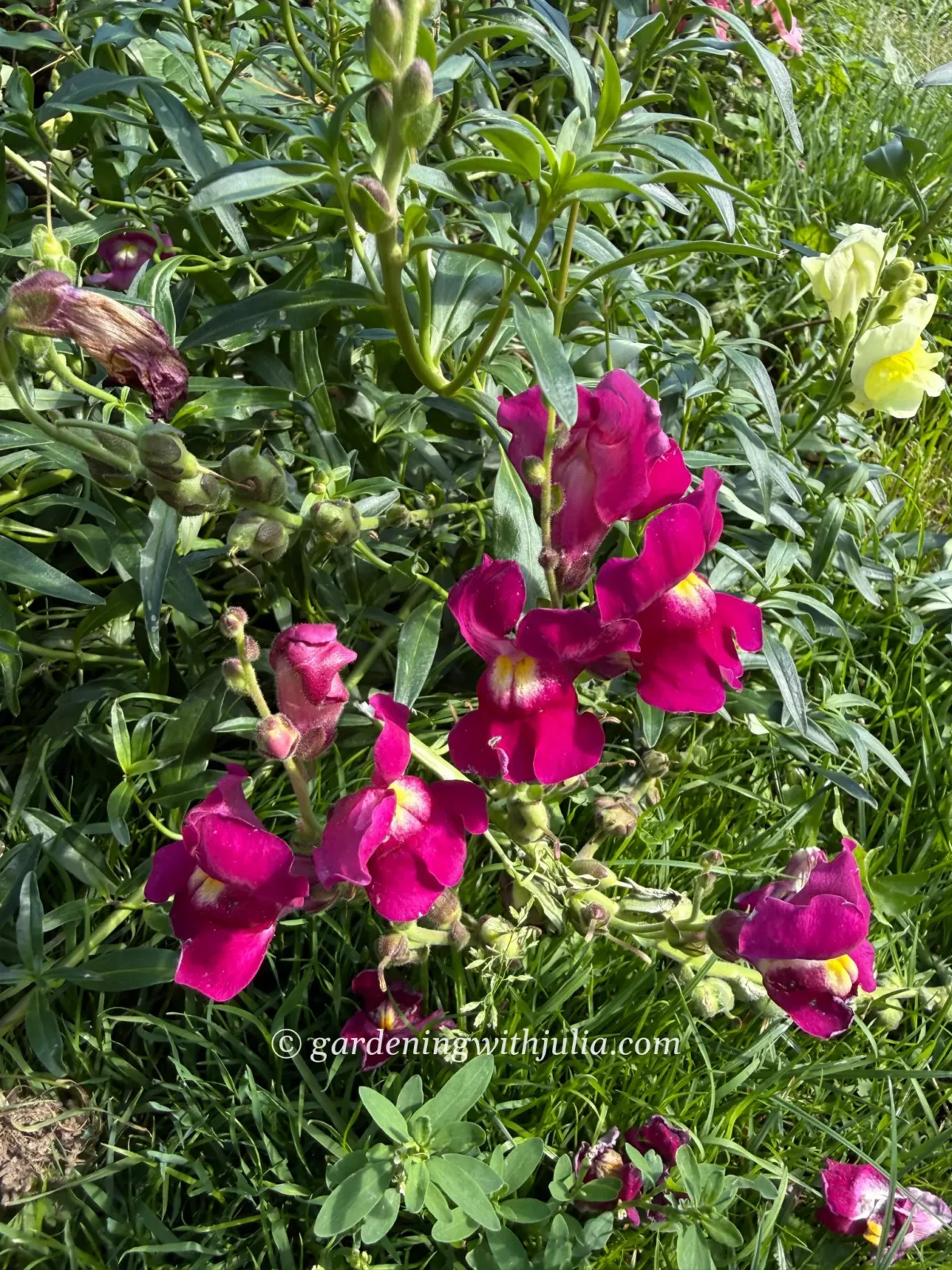
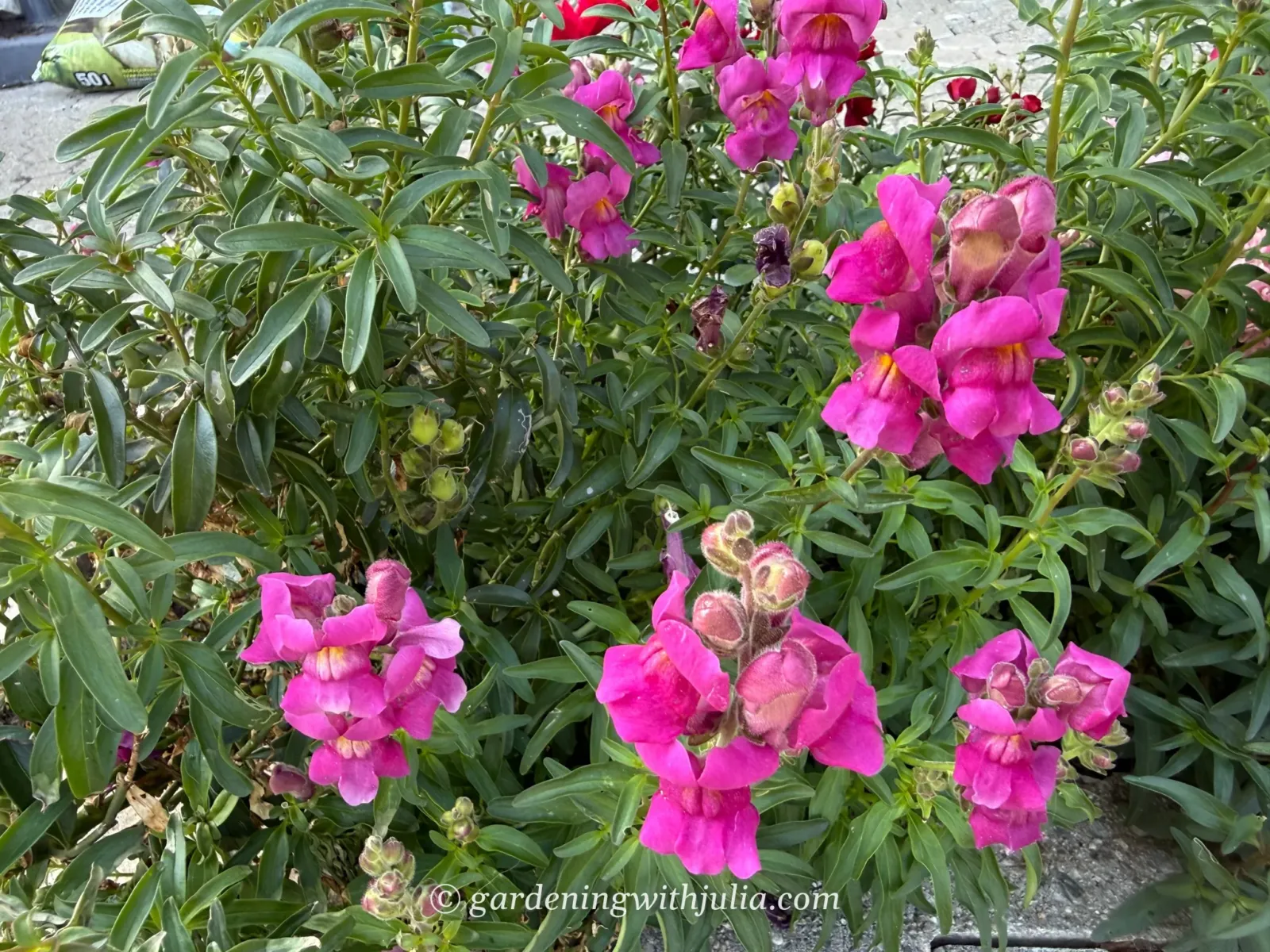
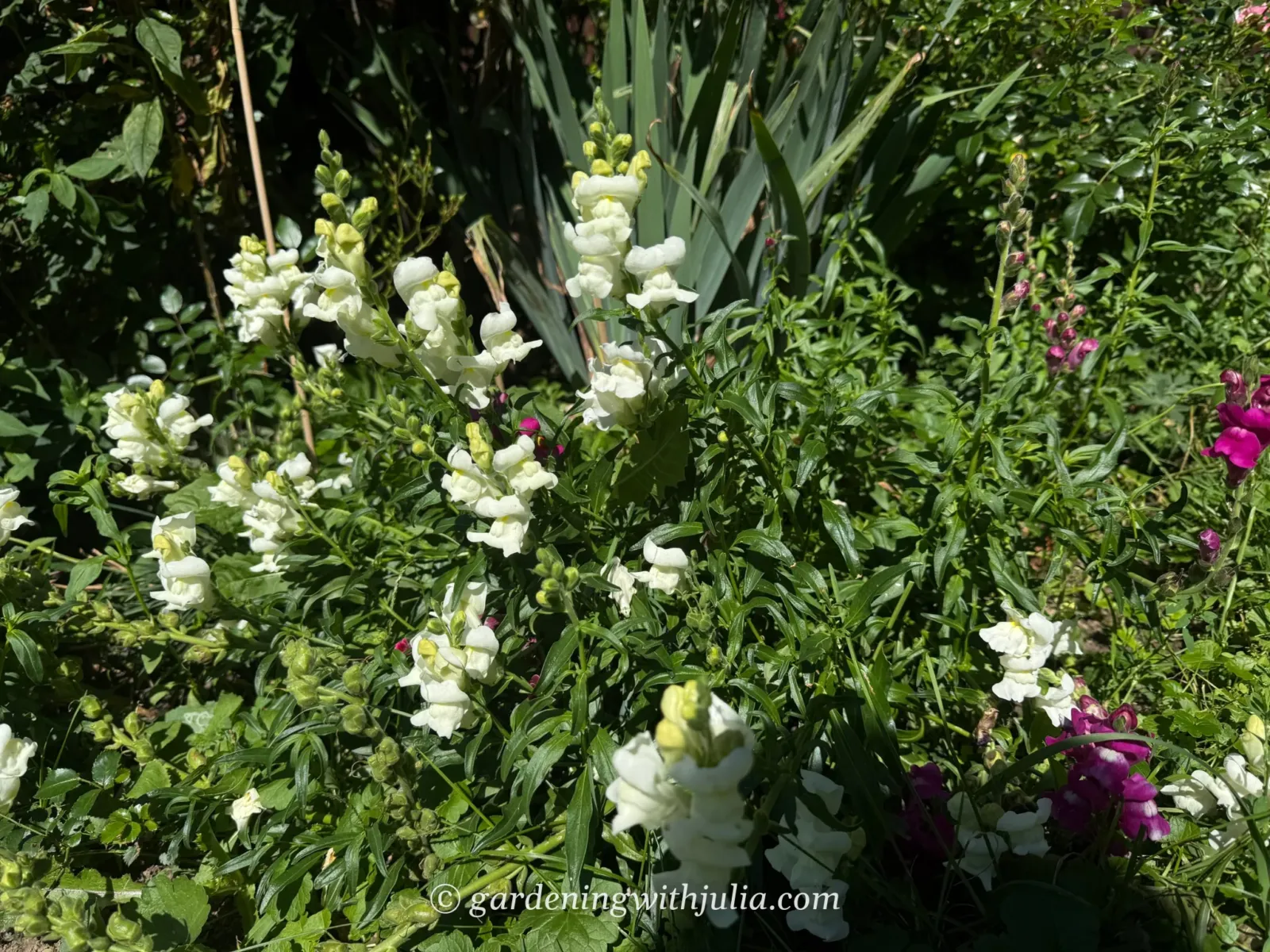
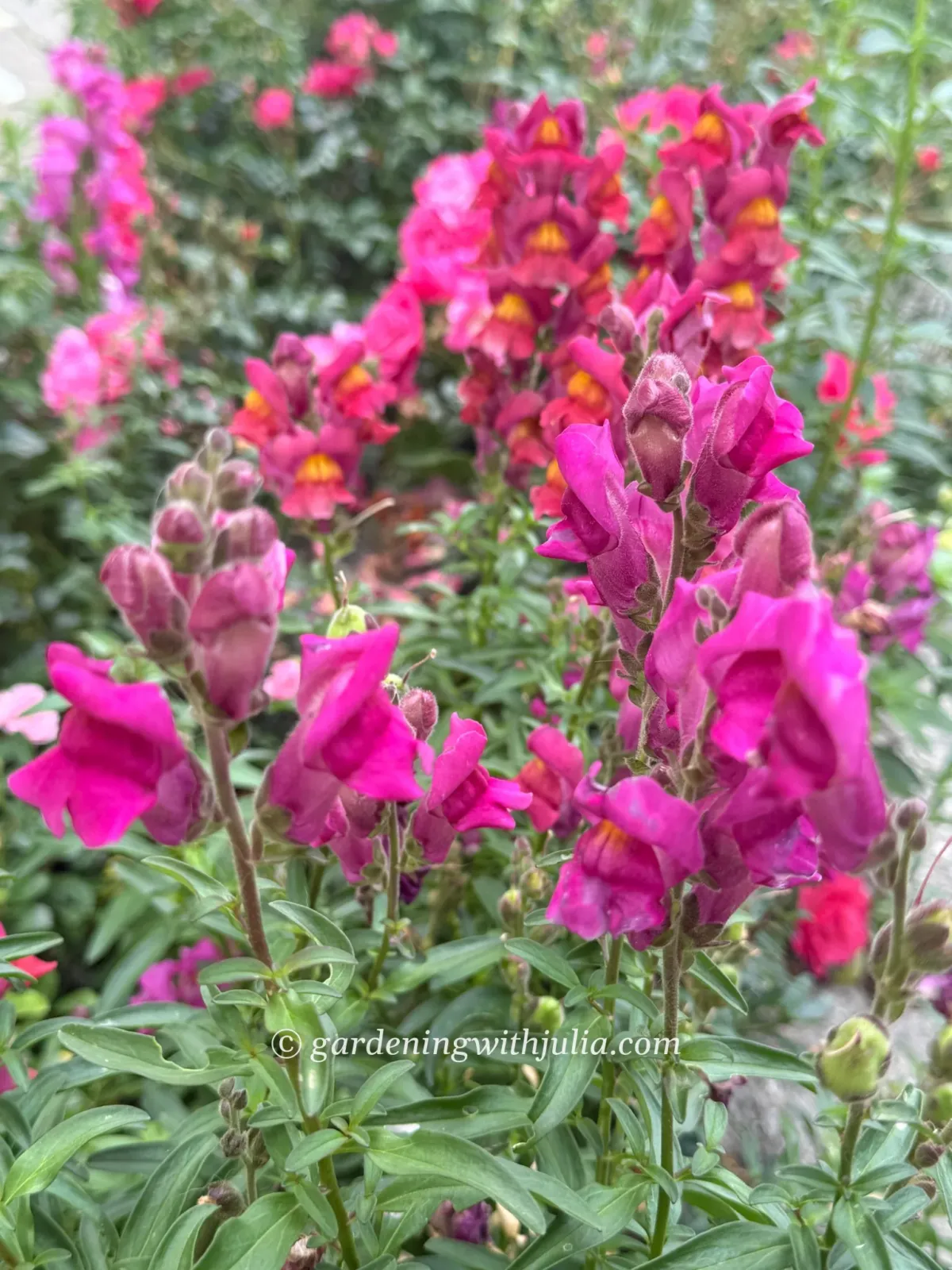
A magenta snapdragon with a yellow throat · a full, pink clump · white and purple flowers in the same bed
Dwarf, medium or tall
On a phone, swipe the table to the left.
| Type | How to recognize it | Good to know |
|---|---|---|
| Dwarf varieties | The shortest, from about 6 inches (15 cm) | Good for bed edges, pots and window boxes |
| Medium varieties | About 18–30 inches (45–75 cm), such as ‘Night and Day’ or ‘Madame Butterfly’ | Good for beds and for cutting |
| Tall varieties, like the “giant mix” I sow | From 3 to 5 feet (90 cm–1.5 m), such as ‘Royal Bride’ or ‘Potomac Appleblossom’ | Need stakes; the best for bouquets |
They’re all the same species, Antirrhinum majus: a short-lived, frost-tender perennial that’s usually grown as an annual. The flowers have two “lips” and grow in spikes at the tips of the stems. [1, 3]
What the flowers look like
01
A dragon’s mouth
The flower has two lips that stay closed. Up close it looks like a dragon’s mouth, which is where the name comes from. [4]
02
Dark colors
Deep purple, red, burgundy. In my garden, in milder winters, these are exactly the plants that make it through.
03
Light colors
White, yellow, pale pink. They brighten up the beds, but in my garden they’re more sensitive to frost and give up more easily.
04
Bicolored
Many flowers have a yellow throat or a patch of another color on the lower lip, like the magenta snapdragon in my garden. [1]
05
Flower spikes
The flowers open one after another on spikes at the tips of the stems, so a single stem stays in bloom for a long time. [1]
And a friend to bumblebees
A flower for pollinators
Bees and bumblebees land on the lower lip and open the flower themselves. Snapdragons attract butterflies, too. [1, 3]
From seed
I grow my snapdragons from seed, in cell trays. I use color mixes, like a “giant mix” packet, and Agrosem seeds. The seeds are tiny and black, and should be scattered thinly. [3]
They need light to germinate: scatter them on the surface without covering them, and keep the tray moist under plastic or a clear lid. At 70–75°F (21–24°C) they come up in 7 to 14 days. [2, 4]
I sow them indoors from early February; in general, they’re sown 8 to 10 weeks before the last frost. This year I also tried sowing in the mini greenhouse at the end of July, but the seedlings are still weak and I don’t know if they’ll make it through the winter. After 3 to 4 weeks, when the first true leaves appear, move the seedlings into cells or small pots. When they reach 3–4 inches (8–10 cm), pinch them back to 1½–2 inches (4–5 cm) so they branch out. [2, 4]
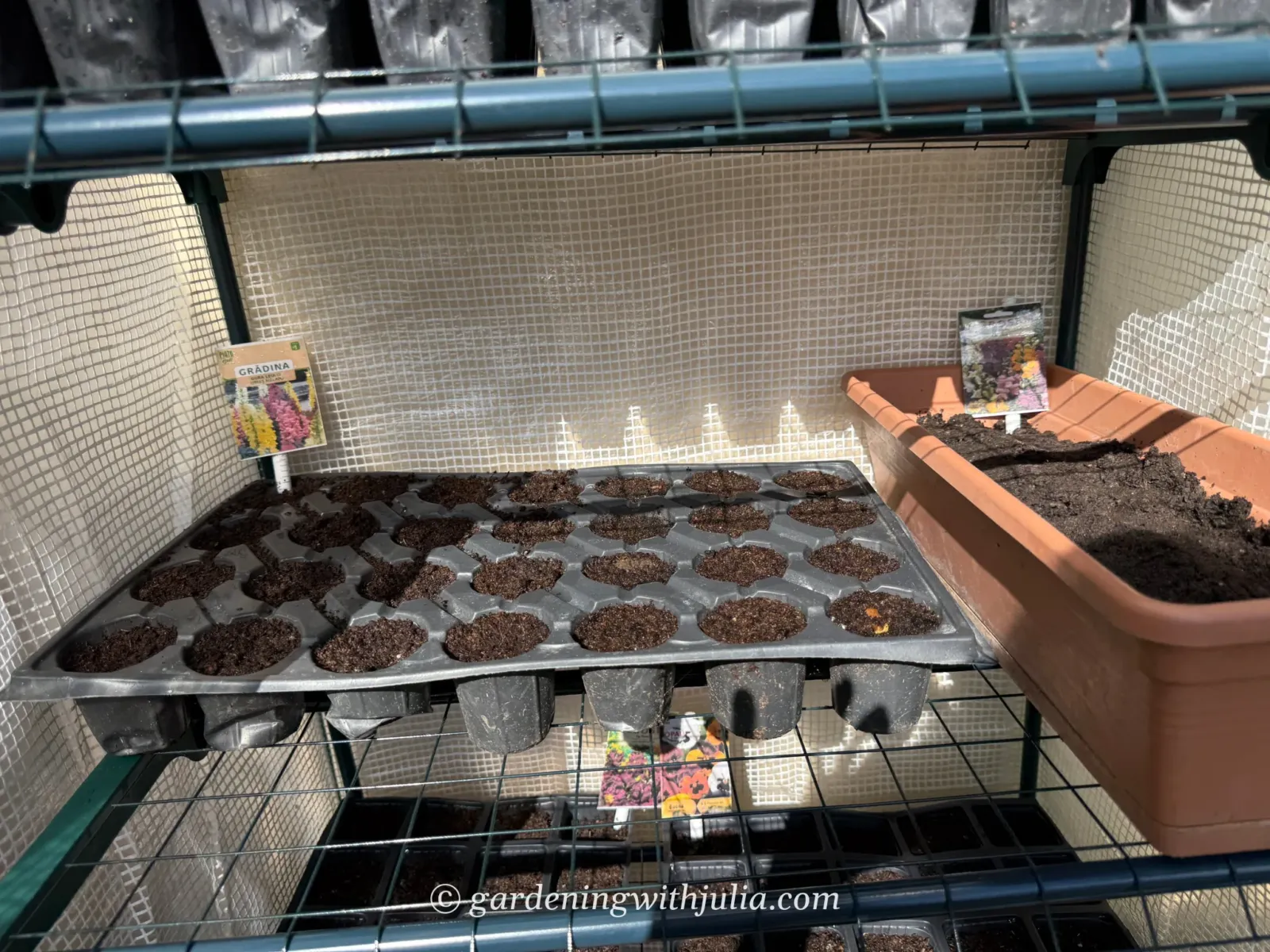
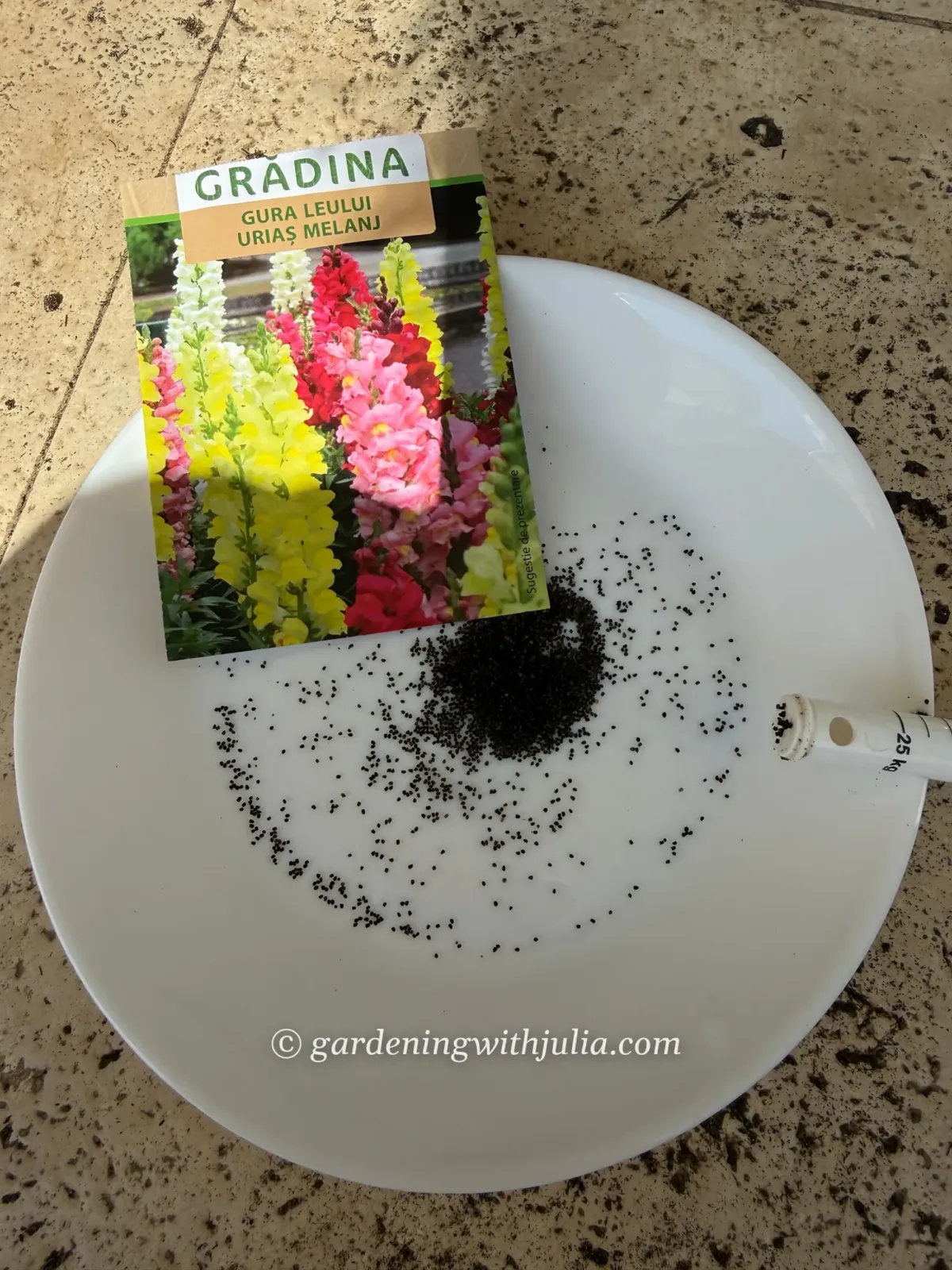
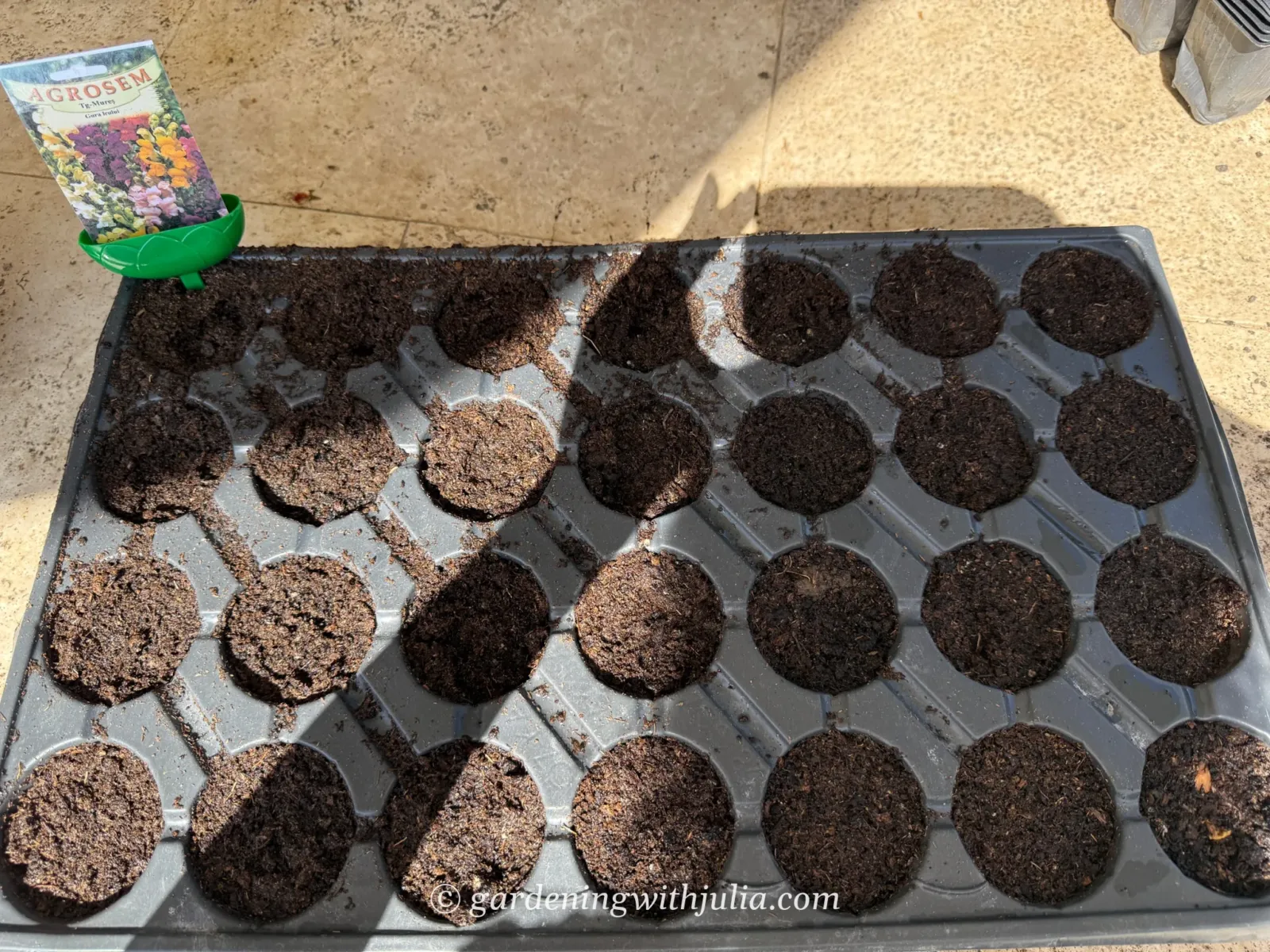
Cell tray and window box in the mini greenhouse · “giant mix” snapdragon seeds · the tray ready for sowing
Care: sun, rich soil and dry leaves
Snapdragons grow well in sun or part shade, in soil that’s rich in organic matter, moist and well drained. They prefer cool weather: they languish in the heat of summer, and in the fall, when it cools down, they bloom strongly again. [1, 5]
Watering and spent flowers
In dry spells, water them regularly at the base, not over the leaves, because wet leaves encourage disease. Pinch or cut off spent flowers so the plant keeps making new ones. [1, 3, 5]
Planting and staking
Plant the seedlings out once the danger of frost has passed, about 12 inches (30 cm) apart, after hardening them off for about two weeks. Tall varieties need stakes. [3]
Seeds and plants that come back
Snapdragons are short-lived perennials: in a mild winter, some plants survive and start growing again in spring. They also self-seed, and the new plants don’t always look like their parents, so every year brings its own color surprise. [3, 5]
The calendar at a glance
On a phone, swipe the table to the left.
| When | Task | Why |
|---|---|---|
| Early February | Sowing indoors, on the surface | The seeds need light |
| After 3–4 weeks | Moving the seedlings into cells or small pots | The first true leaves have appeared |
| March | Self-sown seedlings come up in my garden | As soon as the snow melts |
| After the last frost | Planting out, about 12 inches (30 cm) apart | The seedlings are hardened off and safe from frost |
| Summer | Pick off spent flowers; water at the base in dry spells | New flowers and fewer diseases |
| Late July | This year I also tried sowing in the mini greenhouse | An experiment – I don’t know if they’ll survive the winter |
| Fall | They bloom again, until the hard frosts | Low temperatures suit them |
| Winter | The plants stay where they are | In mild winters, the dark-flowered ones make it through in my garden |
Winter in the mountains
Snapdragons are frost-tender perennials, normally hardy only in warmer zones (7–10). In the mountains they’re usually grown as annuals, but in a mild winter some plants can survive and bloom again in spring. [1, 5]
What works for me in Bran
My seedlings, grown from seed, are in full bloom now, at the end of October, here in Bran. The cool evenings and mornings don’t bother them; in fact, they suit them.
In milder years, the deep purple and deep red plants make it through the winter, while the white or yellow ones give up more easily. They self-seed freely, and the first seedlings come up in March, as the snow melts.
Pests and diseases
The biggest problem is rust: small yellowish swellings appear on the leaves and later burst into rusty powder, leaving dark brown spots on the undersides. Remove affected leaves right away. Downy mildew, powdery mildew, gray mold and root rot can also show up, especially in wet weather and when the leaves stay wet. [1, 2, 3]
Non-toxic and edible
Snapdragons are considered non-toxic to cats, dogs and horses. The flowers are edible but taste bitter, so they’re mostly used as a garnish. [1]
For me, snapdragons are the flowers that are in no hurry to leave: they bloom right up to the edge of winter and come back on their own in spring, from the seeds left in the garden.
Further reading
[1] NC State Extension — Antirrhinum majus (common snapdragon)
[2] Mississippi State University Extension — Snapdragon for the farmer florist
[3] BBC Gardeners’ World — How to grow snapdragons
[4] RHS — Grow it: antirrhinum
[5] NC Cooperative Extension, Wayne County — November plant spotlight: snapdragons