
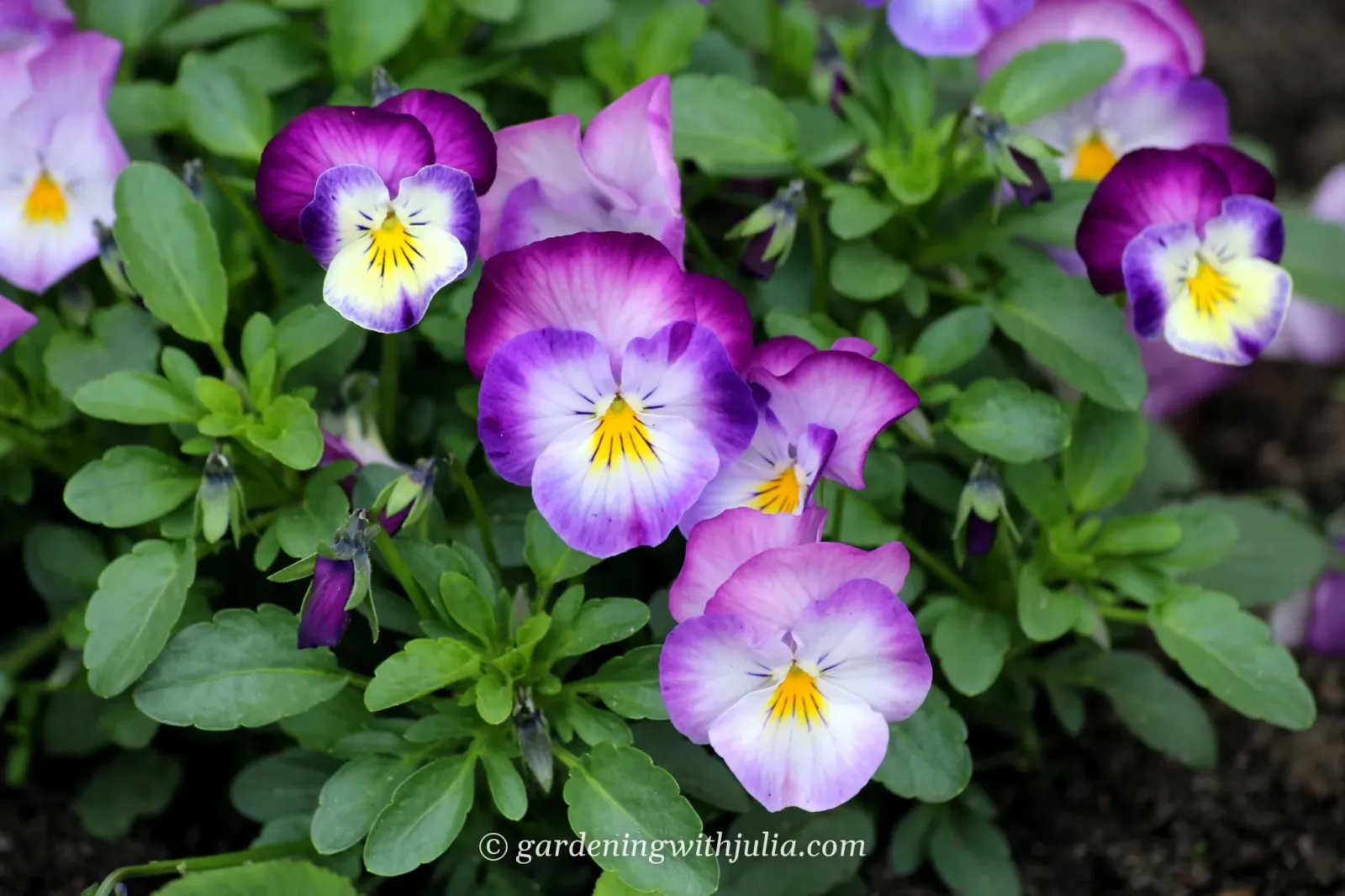
Plants · My garden in Bran, Romania
The pansies in my mountain garden
Viola × wittrockiana: from seed, through winter, into spring
Did you know that pansies can be planted in the fall, not just in spring?
This time of year, many gardeners wonder which flowers they can still plant in beds or window boxes, and which of them will make it through the winter. When it comes to pansies, the answer I hear most often is: “Pansies are only planted in spring!”
Pansies are among the hardiest flowers you can plant in the fall. They handle low temperatures with flying colors and spend the winter outdoors in the garden without trouble. In spring, when the snow melts and the weather starts to warm up, you’ll find them with a strong, well-developed root system. Instead of starting from scratch, they go straight into lush, vigorous clumps full of flowers.
I recommend planting them this season precisely for that early joy: spring greets you with big patches of color much sooner, sparing you the long wait for the plants to grow.
And there’s one more secret worth knowing: small-flowered pansies usually bloom far more heavily than large-flowered ones. Even if their flowers look more delicate, they more than make up for it in abundance, weaving into clumps so full that they end up almost completely covered in color. Personally, I recommend them wholeheartedly to anyone who wants a lively, generous garden in cheerful shades.
If you still have doubts, I invite you to try a little experiment at home: buy a few pansies now, in the fall, and plant them straight in the garden or in pots on the patio. Leave them outside over the winter and watch them transform when spring comes back.
You’ll be pleasantly surprised by the result!
So don’t wait for spring to enjoy them. Fall is, without a doubt, the best time to plant pansies, giving them time to settle quietly into the soil. And to see how spectacularly they grow after coming through the frosts outside, a walk through the garden in April will show you their true strength.
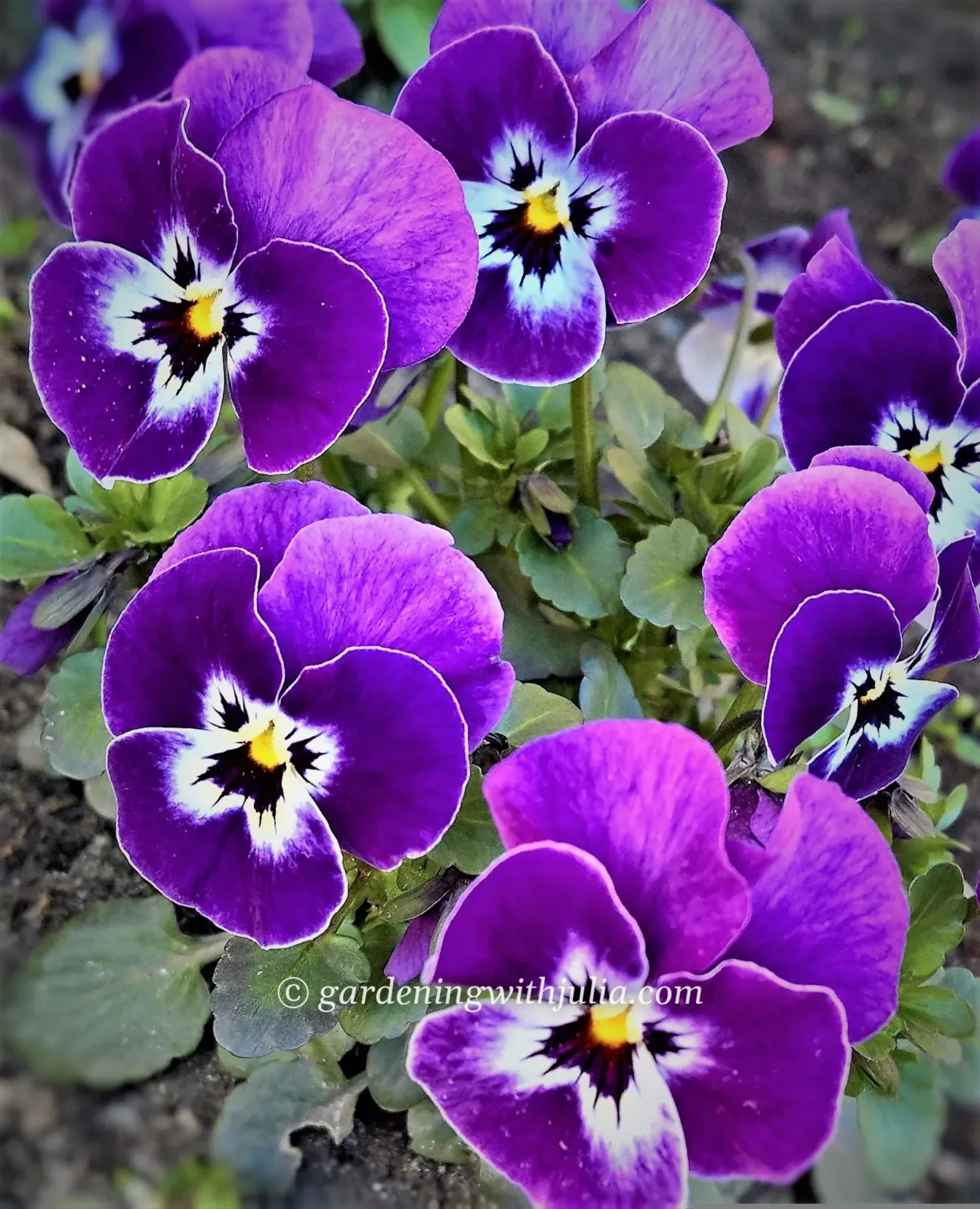
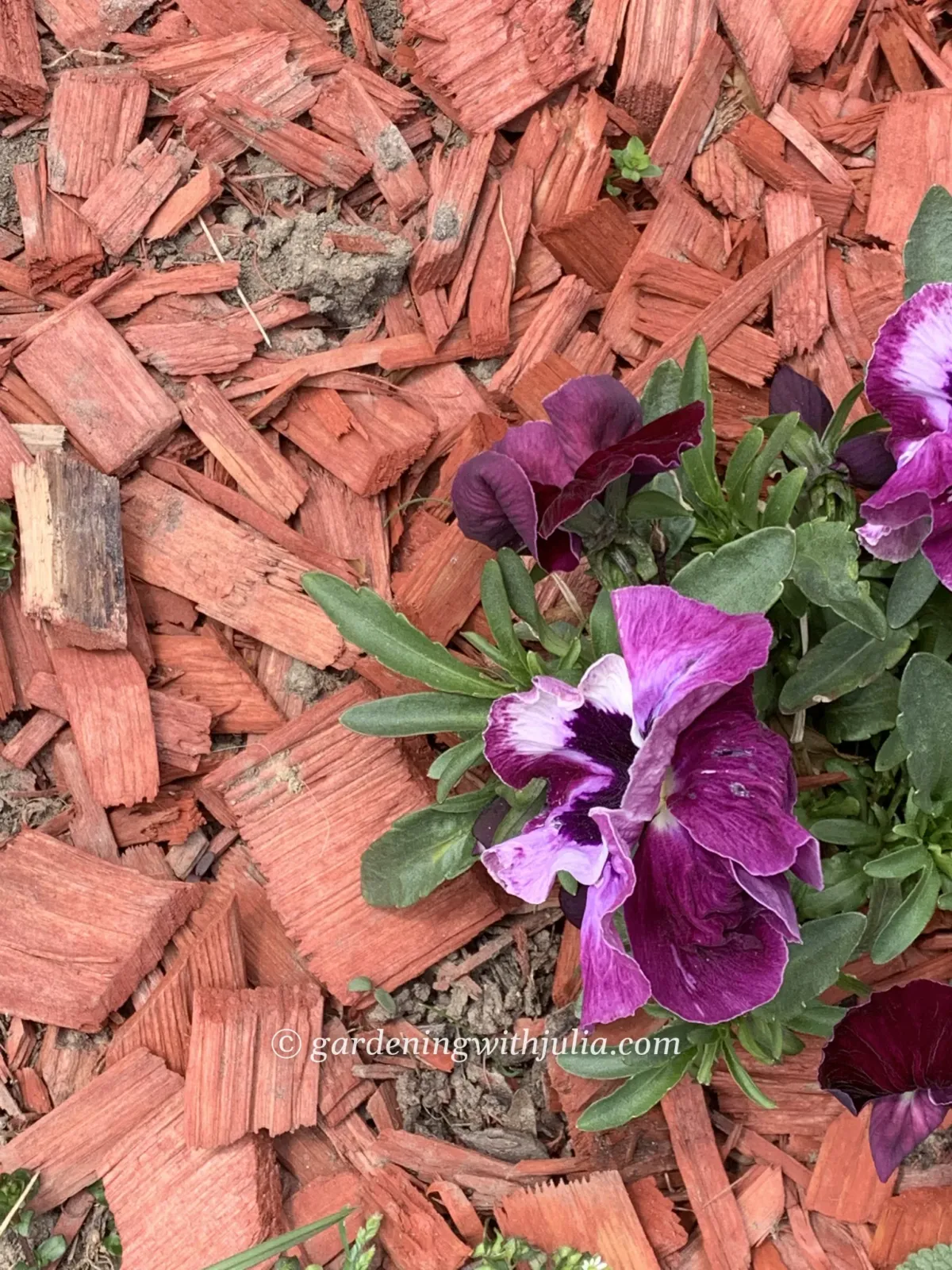
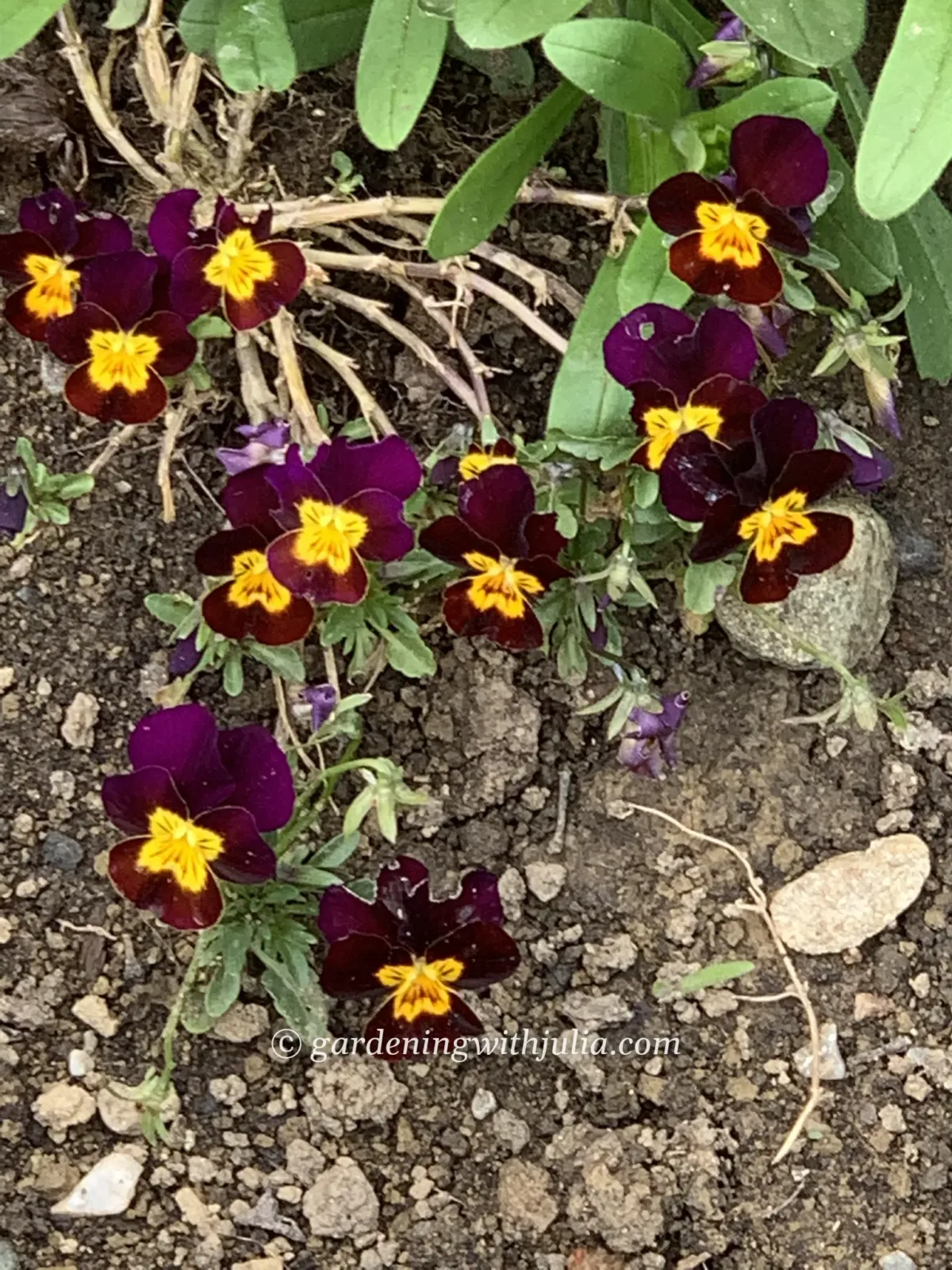
Purple violas with white centers · purple pansies in bark mulch, in April · small burgundy and yellow violas, in May
Pansies, violas and Johnny-jump-ups
On a phone, swipe the table to the left.
| Type | How to recognize it | Bloom and care | Good to know |
|---|---|---|---|
| Pansies (Viola × wittrockiana) | Large flowers, about 1–3 inches (2.5–7.5 cm), often with a dark “face” in the middle | They bloom longer if you remove the spent flowers | Large-flowered mixes such as ‘Swiss Giants’ are easy to find as seed |
| Violas (small-flowered Viola) | Smaller flowers, but lots of them | Bloom heavily with little deadheading; handle filtered sun better | Hardier in the cold than large-flowered pansies |
| Johnny-jump-ups (Viola tricolor) | Small flowers, usually purple, yellow and white | Self-seed readily | One of the species today’s pansies were bred from |
The difference between a pansy and a viola comes down mostly to flower size: pansies have bigger flowers, violas have smaller ones but more of them. In the garden they need the same things: cool weather, light and soil that doesn’t stay wet. [1, 3, 4]
What the flowers look like
01
With a “face”
The lower petals have a large dark blotch around the center. It’s the most common pattern. [3]
02
Clear
The flower is one clean color, or has just a small yellow eye. From a distance, these pansies stand out more in a bed. [3]
03
With fine lines
Thin lines radiate from the center like whiskers over a pale background, like the lilac violas in my garden. [2]
04
Bicolored
The upper petals are a different color from the lower ones, for example purple on top and white or yellow below. Most pansies have two or three colors, or shades of one color. [3]
05
Ruffled edges
Some varieties have crinkled petal edges that make the flower look fuller. [2]
And a hybrid
Panola
A panola is a cross between a pansy and a viola: it has the pansy’s bigger flower, plus the viola’s cold hardiness and steady blooming. [4]
From seed, in summer
I often grow them from seed. I sow in summer, between June and August, in cell trays that I keep in a mini greenhouse. I use color mixes, such as a mixed pansy packet or ‘Swiss Giants’, so I don’t know exactly which colors I’ll get until the first flowers open.
The seeds are small and brown. They only need a thin layer of soil on top, about 1/8 inch (3 mm), and the soil should stay moist until they sprout, usually in 5 to 8 days. Pansies like it cool: in high heat and low light, the seedlings get leggy. [2, 3]
Seedlings need about six weeks to reach transplant size, then another four to six weeks to root in before the cold. The best plants for the garden are short and stocky, with four or five healthy leaves. [2]
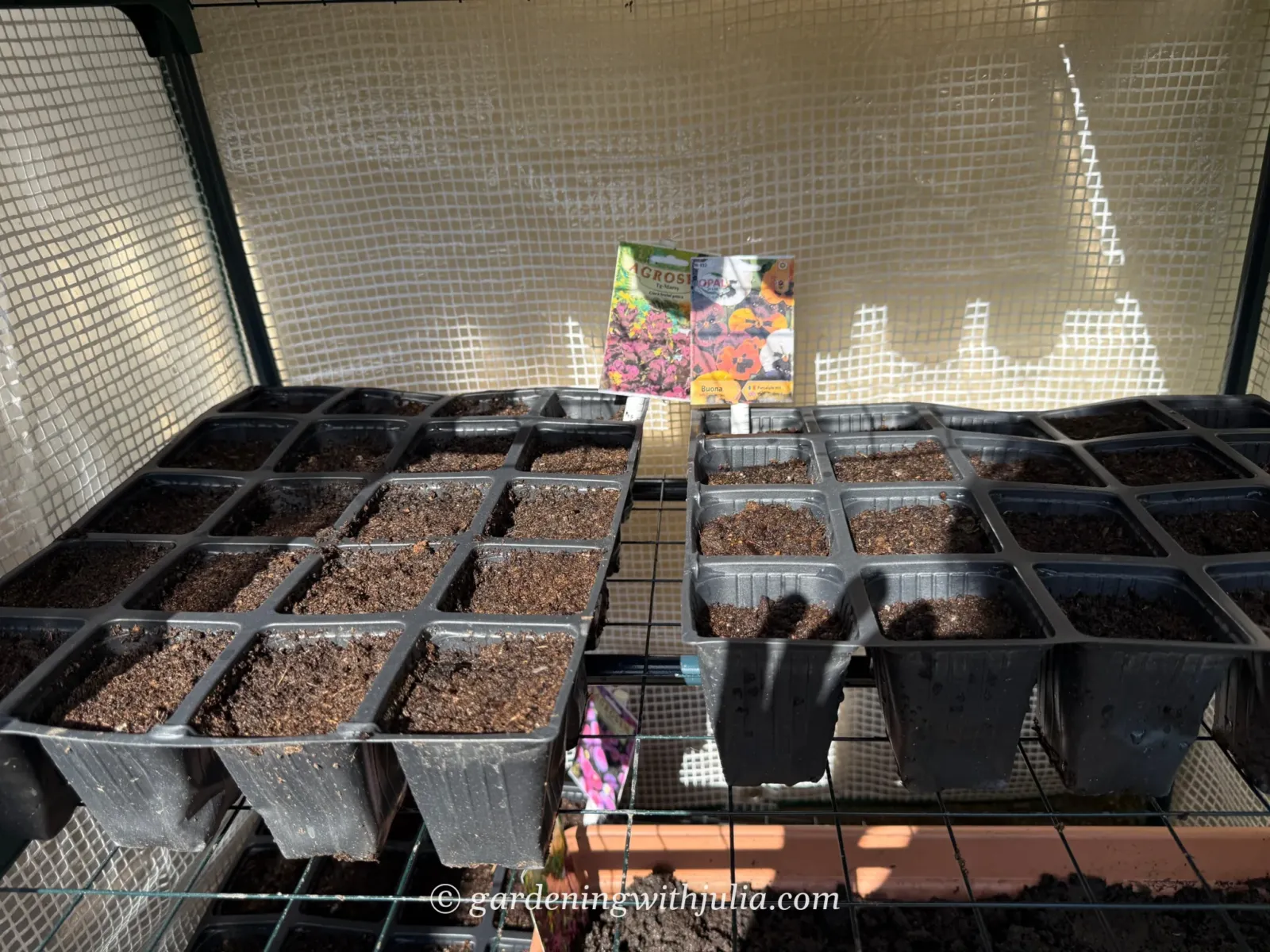
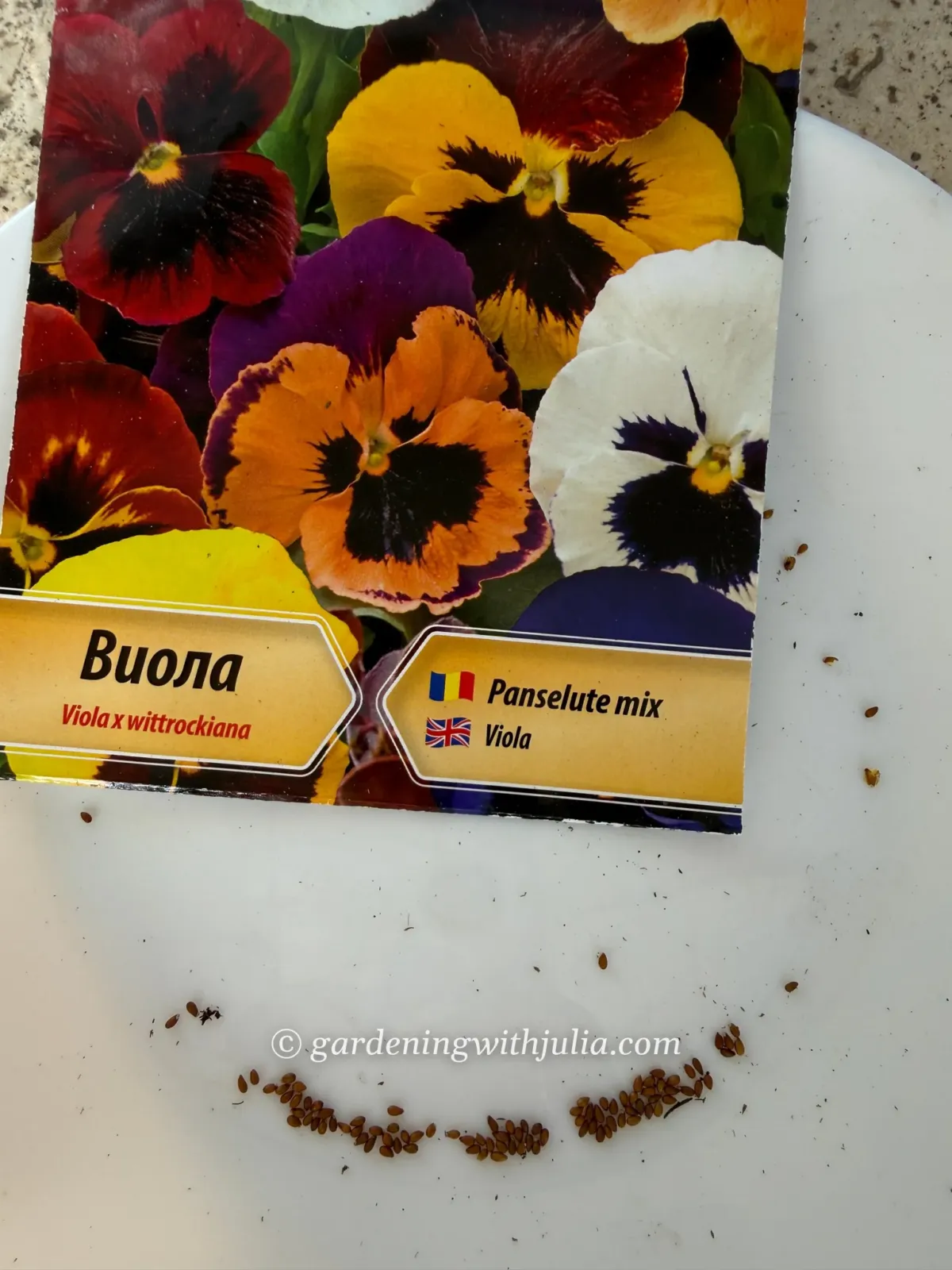
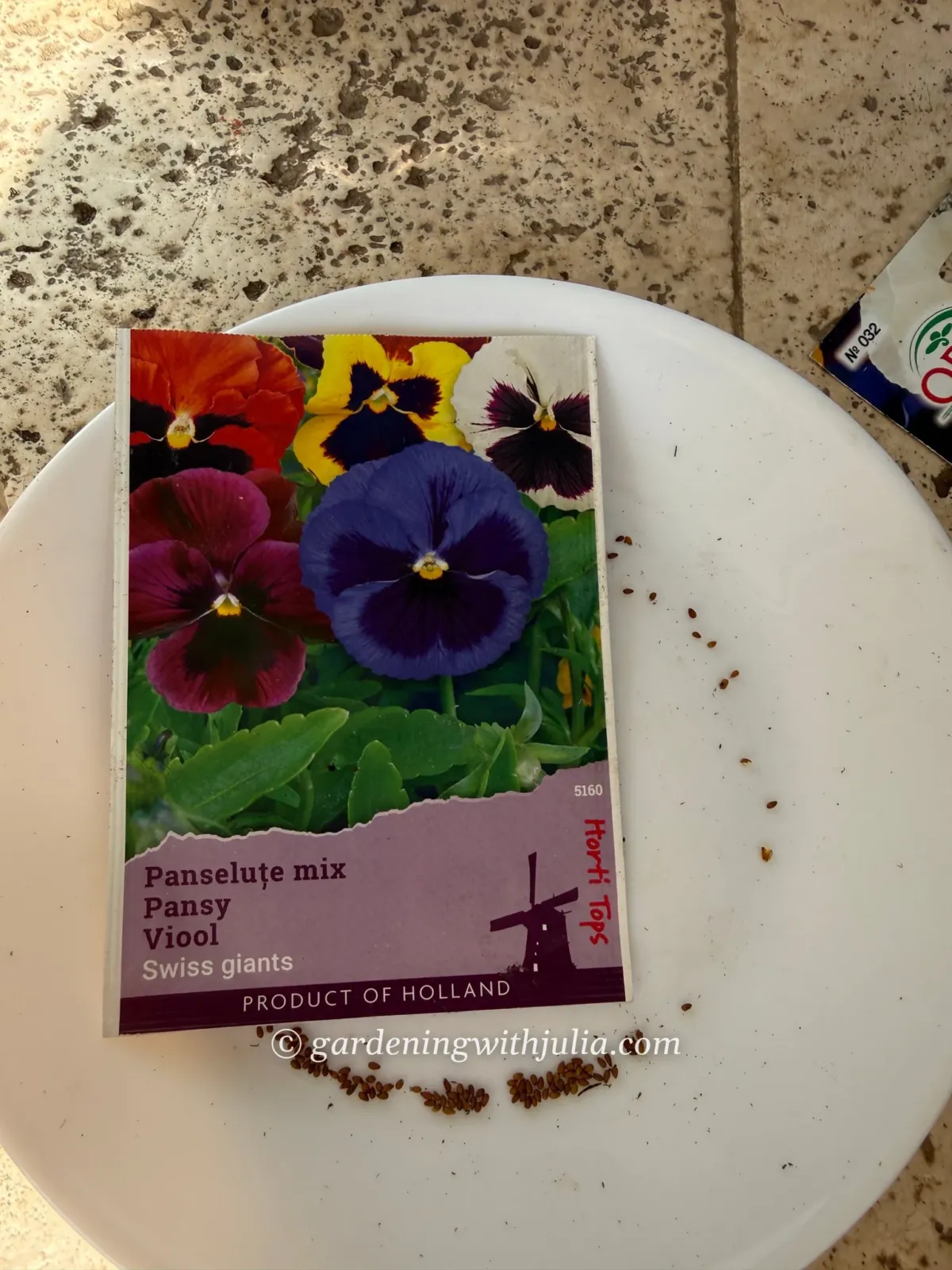
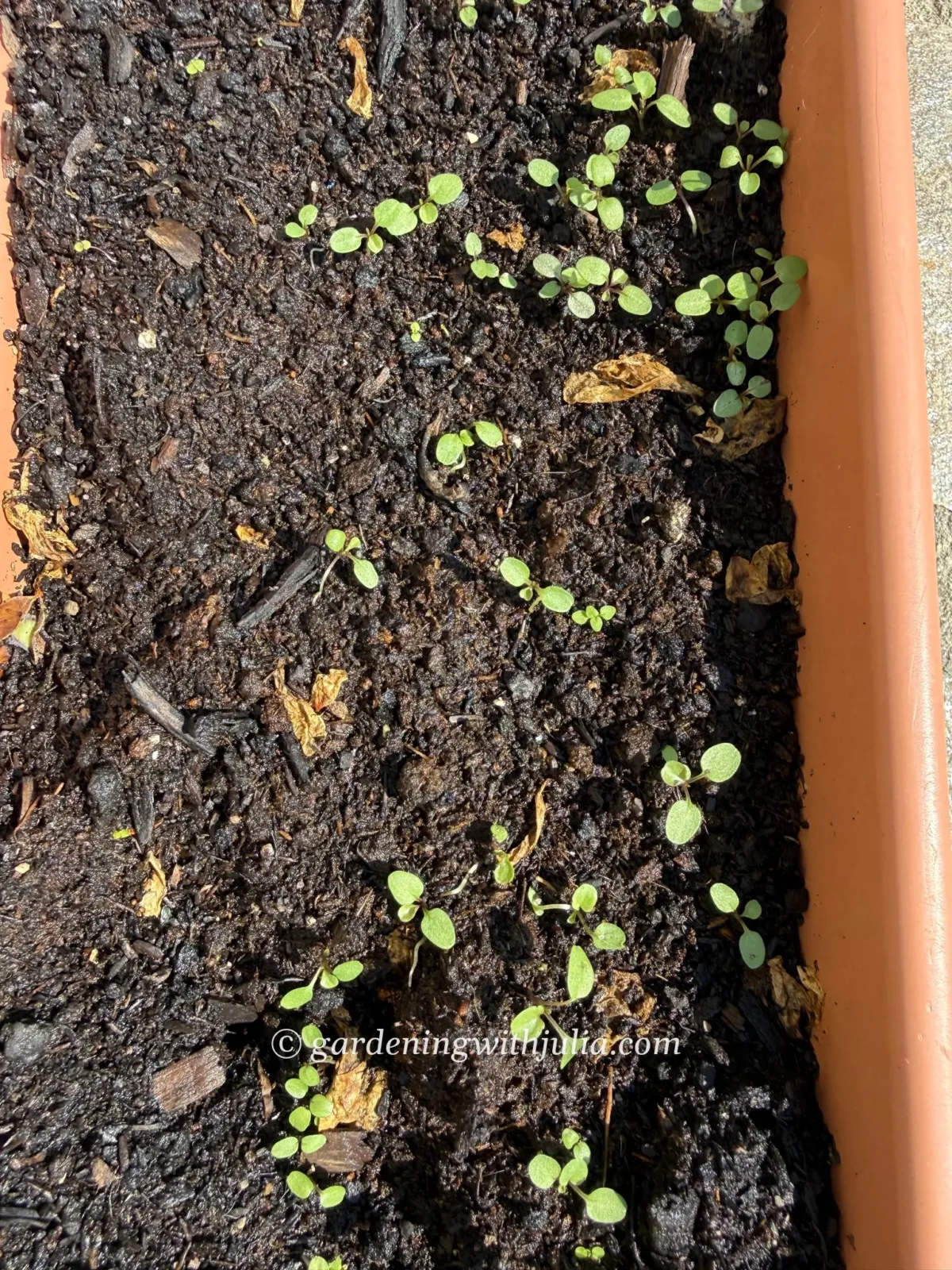
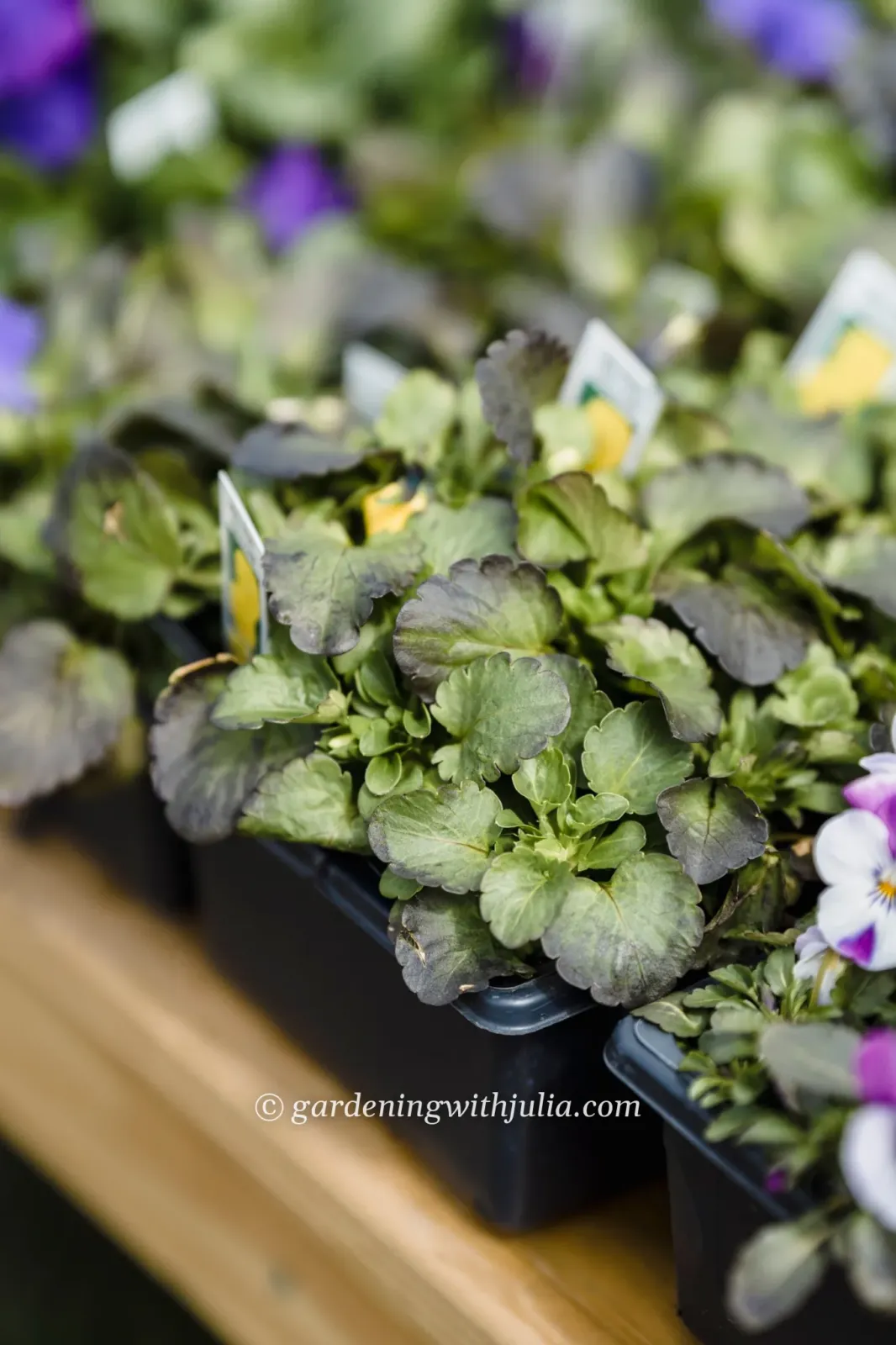
Cell trays in the mini greenhouse · mixed pansy and ‘Swiss Giants’ seeds · young seedlings in a window box · pansies in trays, ready to plant
Care: light, cool weather and soil that drains
Pansies grow well in sun or part shade, in soil that is rich in organic matter, moist and well drained. In too much shade they make fewer, smaller flowers and the plants get leggy. Summer heat wears them out, which is why summer sowing works so well: the new plants take over in the fall. [1, 2, 4]
Watering and feeding
In dry weather, water them deeply in the morning, not in the evening, so the leaves don’t stay wet overnight. They are heavy feeders, especially in pots and window boxes: a liquid fertilizer every two to three weeks keeps them blooming. Too much nitrogen makes the leaves soft and prone to rot. [2, 4]
Planting
Fall seedlings go into the garden about six weeks before a hard freeze. Planted in the fall, they come out bigger in spring than pansies planted in spring. Space them 7 to 12 inches (18–30 cm) apart. It’s best not to grow pansies in the same spot for more than three years in a row, because soil diseases build up. [2, 5]
Spent flowers and seeds
Pinch or cut off the spent flowers, stem and all. That way the plant doesn’t spend its energy on seed and keeps blooming longer. Violas bloom heavily even without much deadheading. If you want pansies to self-seed, leave a few seed pods to ripen in late spring. Plants that come up on their own don’t always look like the parent plants, especially with mixes and hybrids. [1, 2, 4]
The calendar at a glance
On a phone, swipe the table to the left.
| When | Task | Why |
|---|---|---|
| June–August | Sowing in cell trays | The seedlings have time to grow before fall |
| About 6 weeks after sowing | Moving the seedlings to their spot | They need another 4–6 weeks to root in before the cold |
| September | Planting out in the garden | Fall-planted pansies come out fuller in spring |
| Winter | Pine boughs or straw when the ground freezes without snow | Repeated freezing and thawing hurts them |
| March–July | Bloom; remove spent flowers | They keep blooming longer |
| Late spring | Leave a few seed pods to ripen | For new plants from self-seeding |
| July | Pull out plants worn out by the heat | Make room for the seedlings sown in summer |
Winter in the mountains
Pansies are hardy biennials that are usually grown as annuals. The flowers hold up to about 15°F (−10°C), and the base of the stems survives much harder frosts. What hurts them most is repeated freezing and thawing without snow cover. A layer of pine boughs or straw, added once the ground has frozen, helps. [2, 5]
What works for me in Bran
I often grow them from seed, sown in summer between June and August. The seedlings make it through winter in Bran and bloom again in spring.
Some self-seed and come up on their own in the garden, from one year to the next.
Pests and diseases
The most common problems are slugs and snails, aphids and spider mites. In wet weather you may see leaf spots, powdery mildew, gray mold or root rot, especially in soil that stays soggy. Watering in the morning and moving them to a new spot every few years both help. [1, 2, 3]
Edible flowers, with one caution
Pansy flowers are edible: they can be candied or used to decorate cakes. But only from plants grown without chemical treatments. Plants bought from nurseries or garden centers may have been treated with systemic pesticides. [1]
For me, pansies tie the seasons together: I sow them in summer, let them root in during the fall and see them again in spring, blooming once more after winter.
Further reading
[1] NC State Extension — Viola × wittrockiana (pansy)
[2] Utah State University Extension — Growing pansies
[3] Iowa State University Extension — Growing pansies & violas
[4] Clemson HGIC — Pansies, violas, and panolas
[5] University of Kentucky — Pansies: winter annuals for the spring garden (1983)