
Plants · My garden in Bran, Romania
The English daisies in my mountain garden
Bellis perennis: small flowers in spring and fall
Did you know that English daisies (Bellis perennis) grown from seed show their first flowers as early as the fall?
This time of year, many gardeners wonder whether the little flowers they put in the ground later in the season will manage to do anything, or whether they have to wait patiently until next year. When it comes to English daisies, the answer I hear most often is: “They only bloom in spring!”
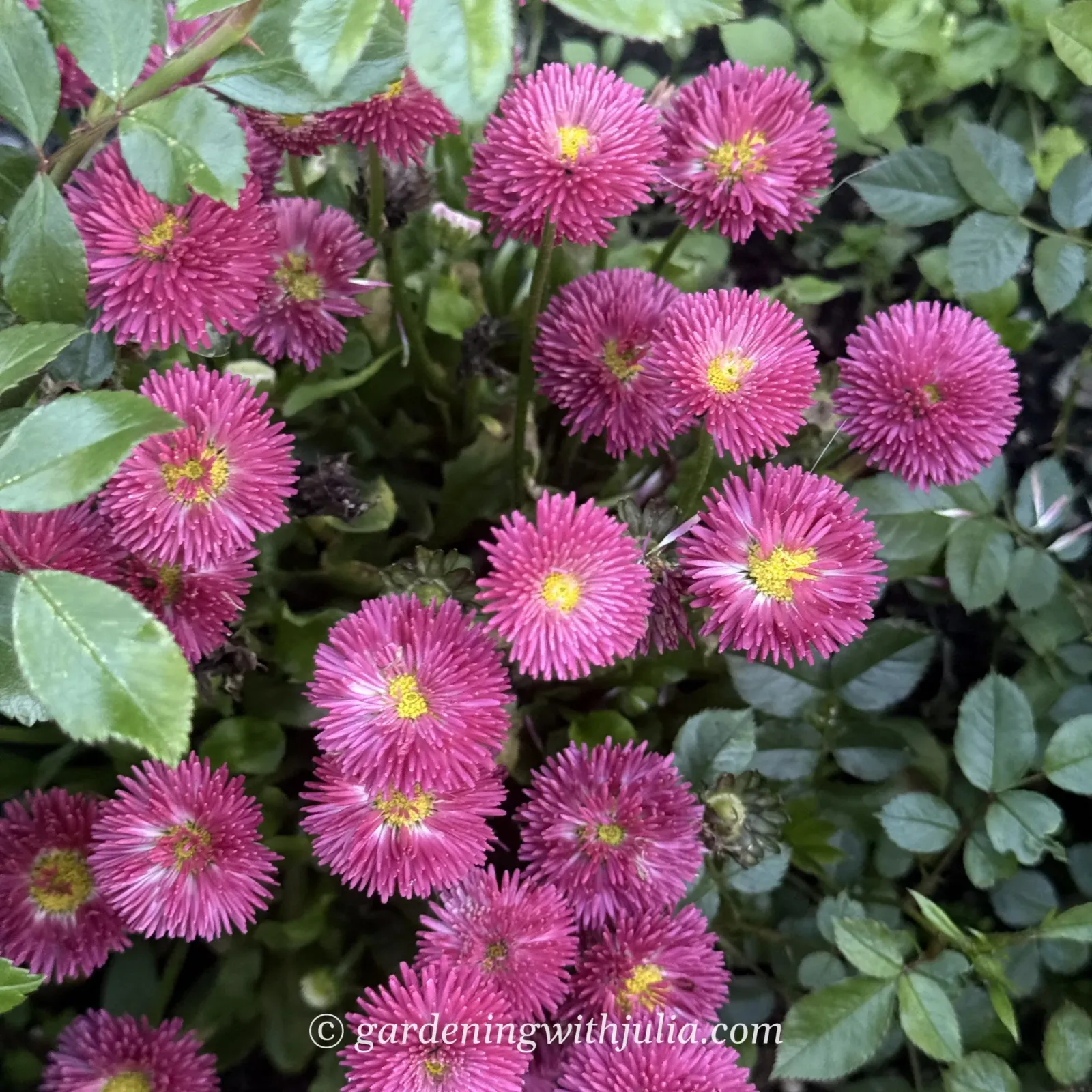
Well, the truth is quite different: the seedlings I sowed and grew on in April are already blooming right now, up here in Bran! They handle the cool fall weather with flying colors, open their delicate petals on mild, sunny days and get ready to spend the winter outdoors, in beds or window boxes, showing surprising toughness.
I recommend growing and planting them early precisely for this double joy: you enjoy their patches of color right now, and in spring they greet you again with full, lush clumps.
And there’s one more secret worth knowing: English daisies grown from your own seed are usually much tougher and better suited to a mountain climate than the ones bought already in bloom from big stores. Even if their flowers sometimes look smaller and more delicate, they more than make up for it in resilience, forming vigorous rosettes that fill in beautifully. Personally, I recommend them wholeheartedly to anyone who wants a garden full of life until the snow settles in!
If you still have doubts, I invite you to try a little experiment at home: sow or plant a few now, in the fall. Let them face the frost and enjoy the show when spring arrives. The result will delight you, without fail!
So don’t wait for spring to enjoy these dainty daisies. Fall is, without a doubt, a wonderful time to watch them come to life and color, proving that nature has its own perfect rhythm, whatever the altitude.
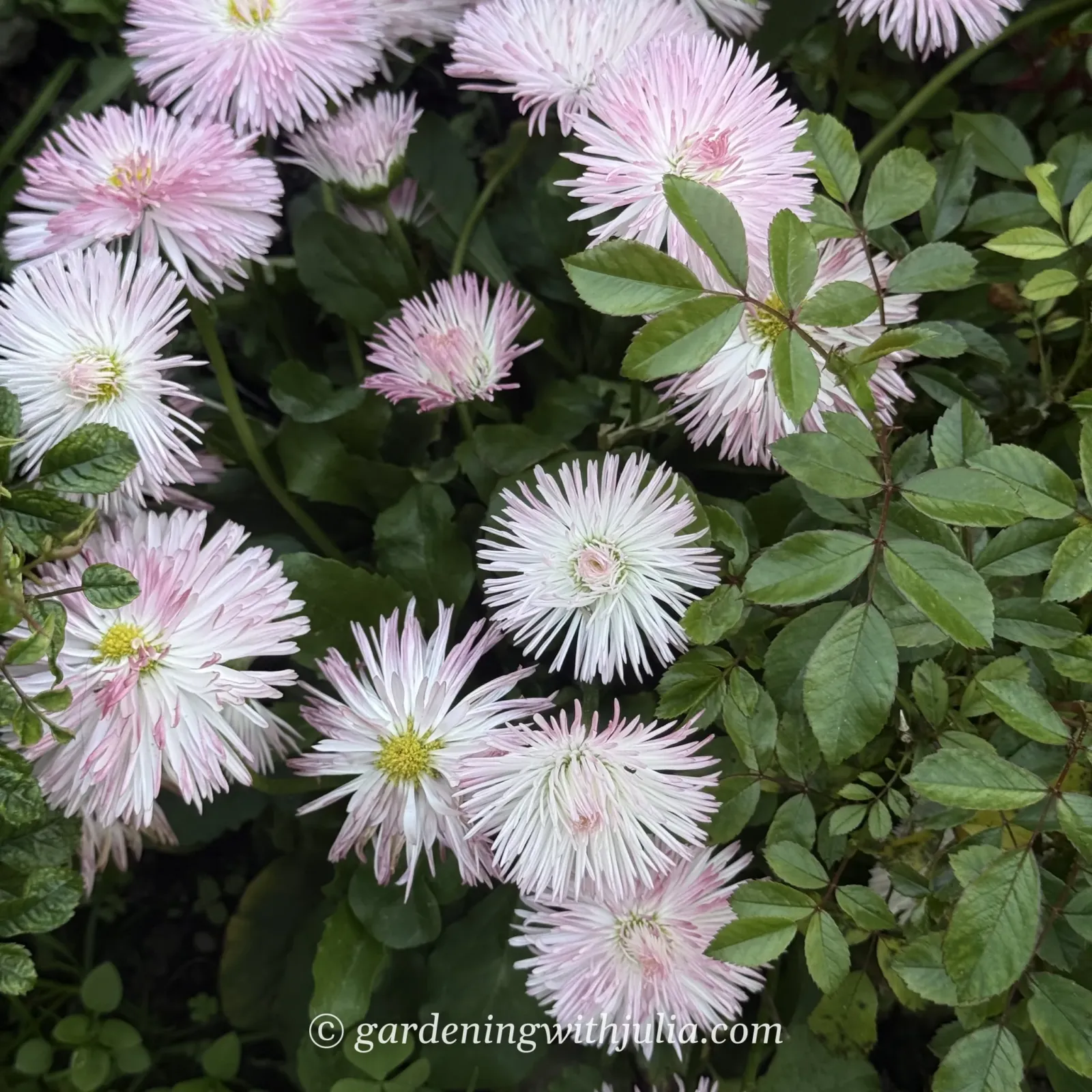
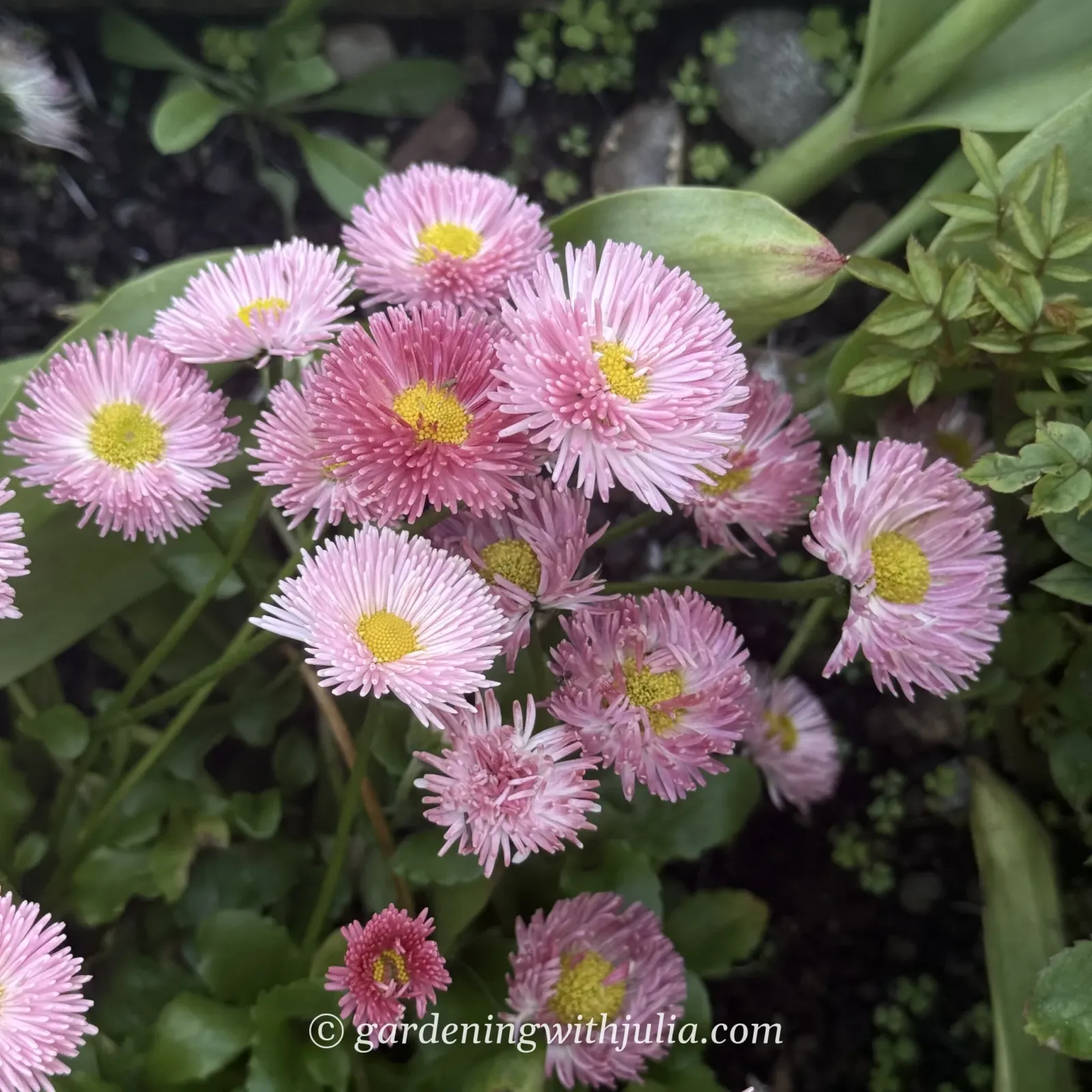
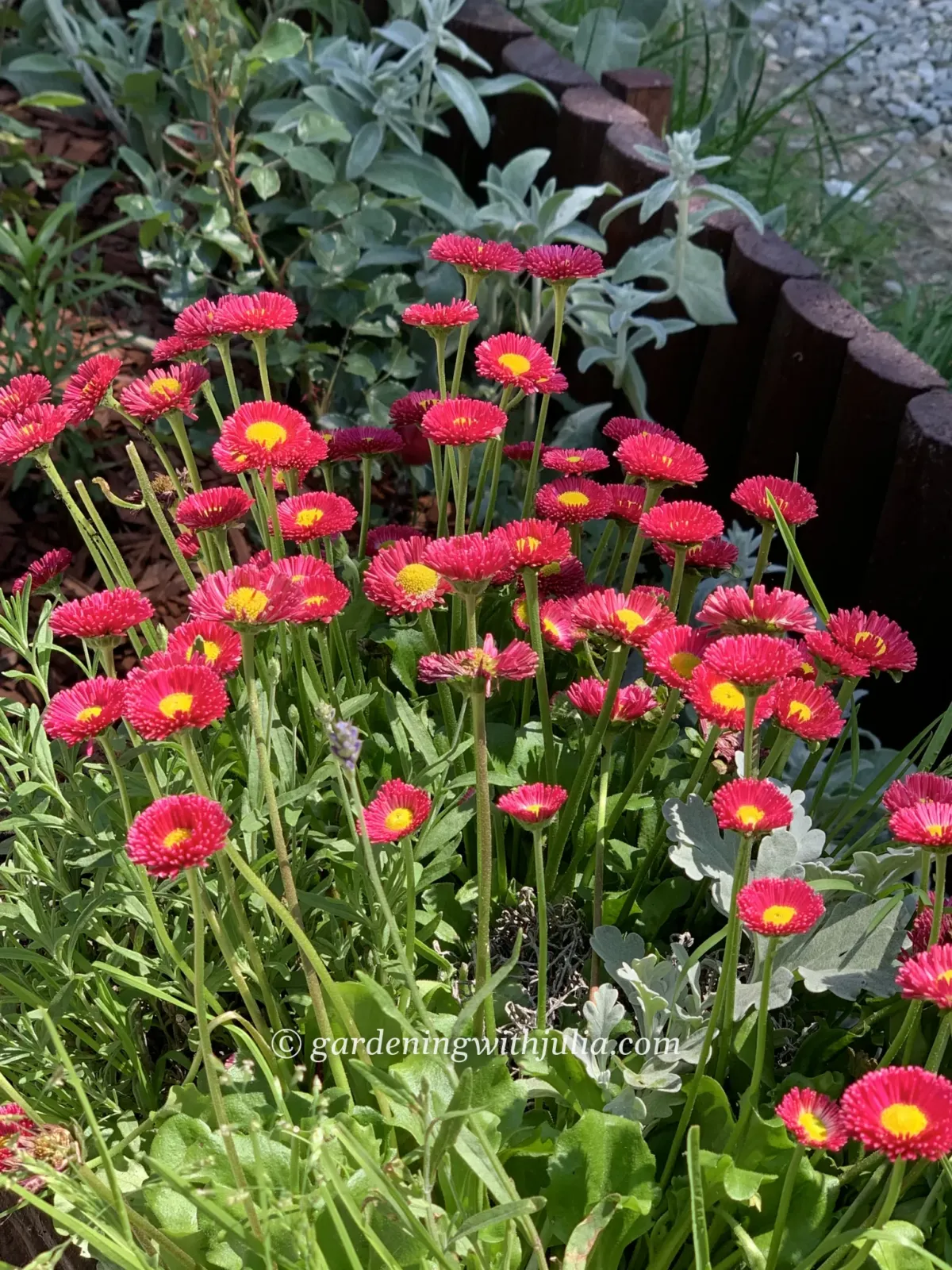
White with pink tips · pink with yellow centers · a bed of red English daisies, in June
The lawn daisy and the garden daisy
On a phone, swipe the table to the left.
| Type | How to recognize it | Good to know |
|---|---|---|
| Wild English daisy (Bellis perennis) | Small, single, white flowers tinged with pink, with a yellow center, on low rosettes | Grows in meadows and lawns; also spreads by short rhizomes |
| ‘Pomponette’ daisies | Double flowers, round like pompoms, up to 1½ inches (4 cm) across, with quilled pink, red or white petals | Hardy to about 5°F to −4°F (−15°C to −20°C); bloom mostly in spring and early summer |
| Large-flowered, semi-double or double daisies | Flowers up to 2 inches (5 cm) across, with more than 20 petals and a yellow center | Stay short, about 3–6 inches (8–15 cm); fade in summer heat |
They are all the same species, Bellis perennis. Garden varieties have bigger, fuller and more colorful flowers than the lawn daisy, but they need the same things: cool weather, moisture and light. [1, 2, 3, 4]
What the flowers look like
01
Single
A single row of white petals, often with pink tips, around a large yellow center. That’s how the meadow daisy looks. [2]
02
Pompom
Small, round flowers with short, quilled petals packed together like buttons. The ‘Pomponette’ daisies on my seed packet look like this. [3]
03
Large doubles
Many rows of petals that hide almost the whole center; the flowers reach 2 inches (5 cm). [1]
04
Long petals
Long, thin petals that give the flower a tousled look, like the white daisies with pink tips in my garden.
05
Colors
White, pink, red or magenta, almost always with a yellow center. [1]
And a plant for pollinators
Food for bees
English daisies are on the RHS “Plants for Pollinators” list: their pollen and nectar feed bees, butterflies and hoverflies. [2]
From seed
I grow my English daisies from seed. This year I sowed them in April, and the seedlings were already blooming in the fall, here in Bran. The Agrosem packet, “Bănuței – Pomponette roz” (pink Pomponette), lists sowing in June–August, planting out from September to March, a spacing of 6 × 4 inches (15 × 10 cm) and bloom from April to October. In my garden in Bran, though, they only bloom in spring, from April to June, and again from late September; they don’t bloom in summer, not even in the shade.
The seeds are tiny and need light to germinate: scatter them on the surface without covering them, and keep them moist. According to the packet, they come up in 8 to 15 days. [5]
Indoors or in a mini greenhouse, sow them 8 to 10 weeks before moving them outside. Sown in summer, they usually don’t bloom until the following year; sown early in spring, they can bloom in their first year, as mine did. [5]
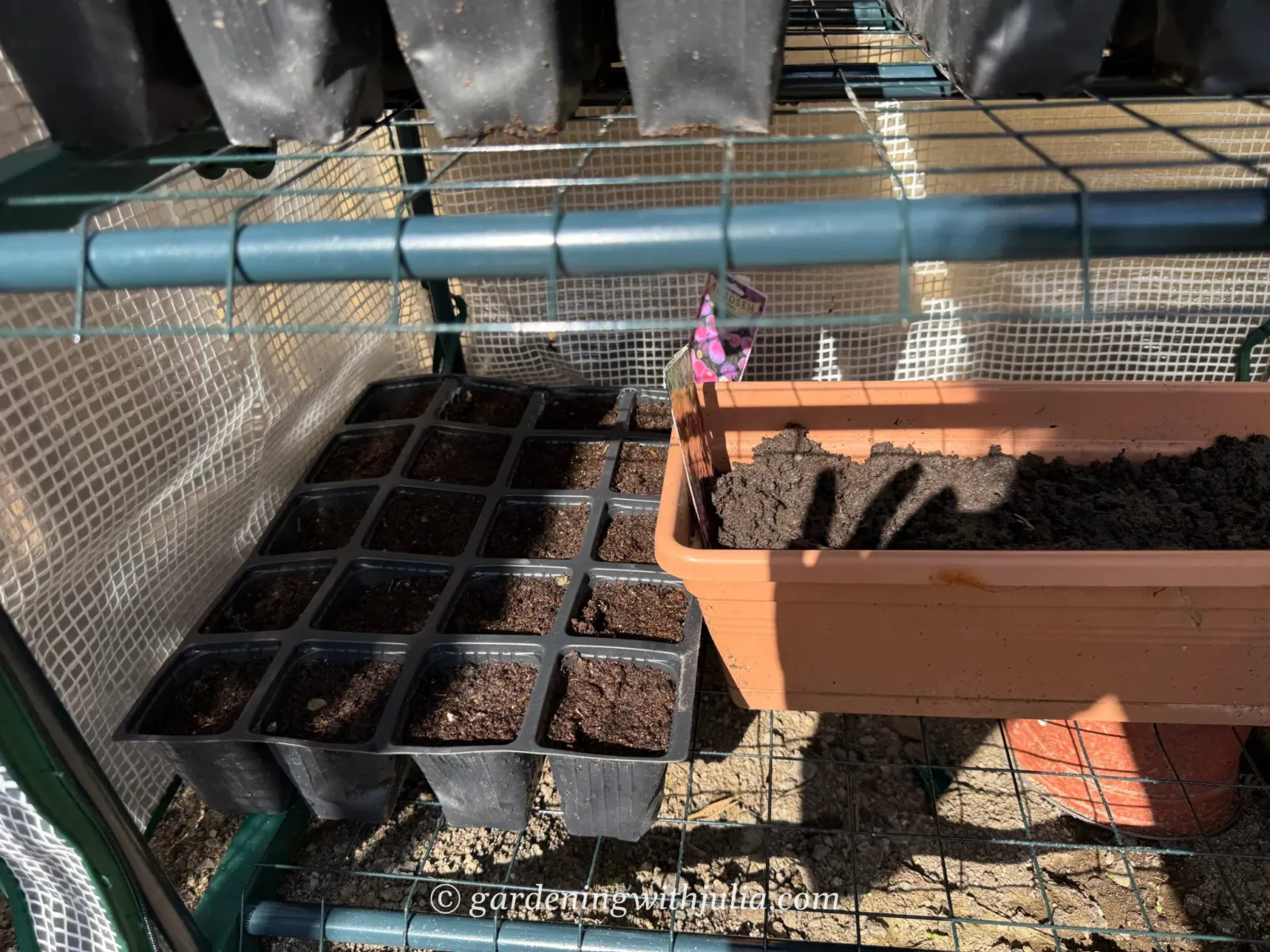
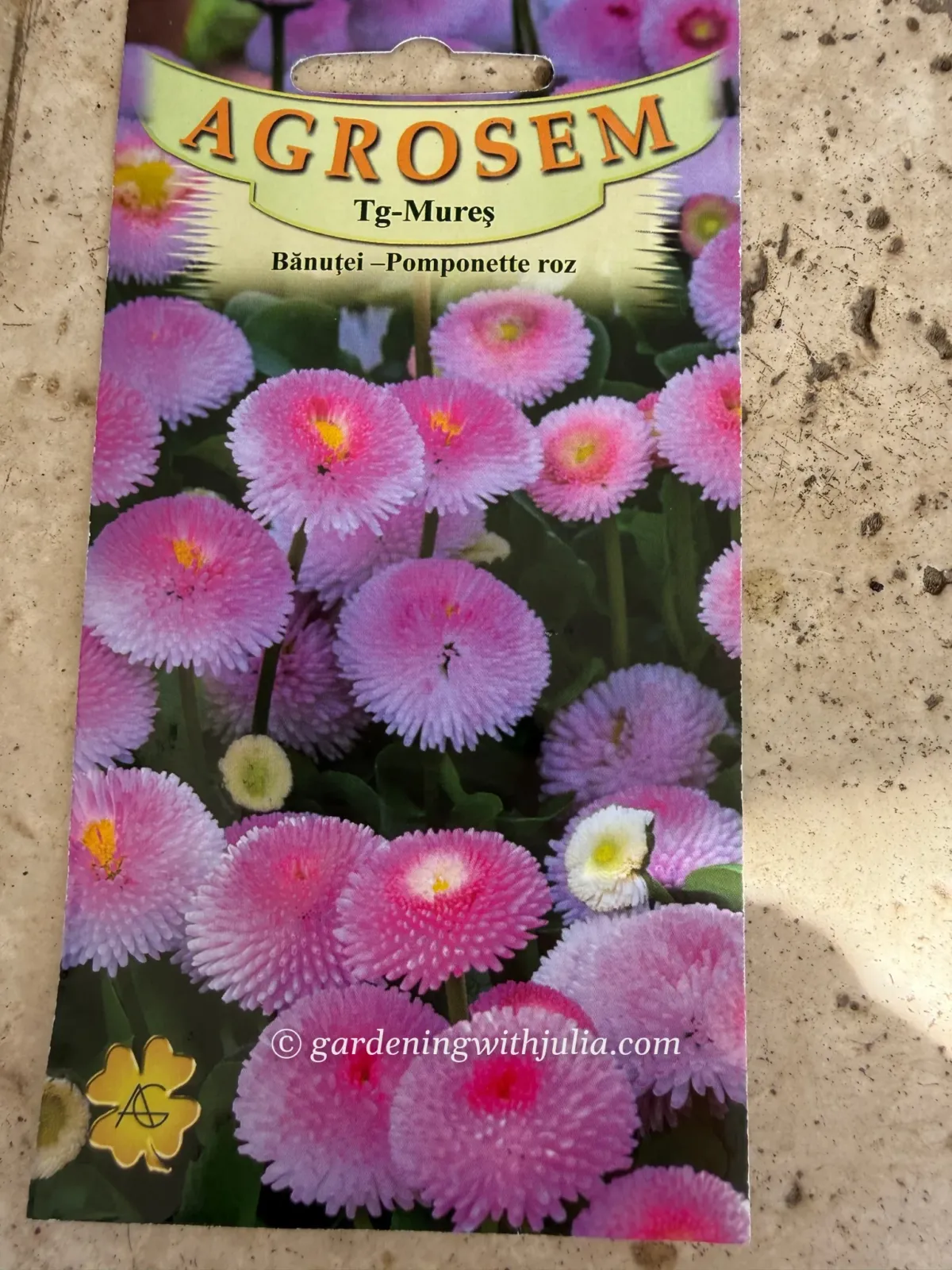
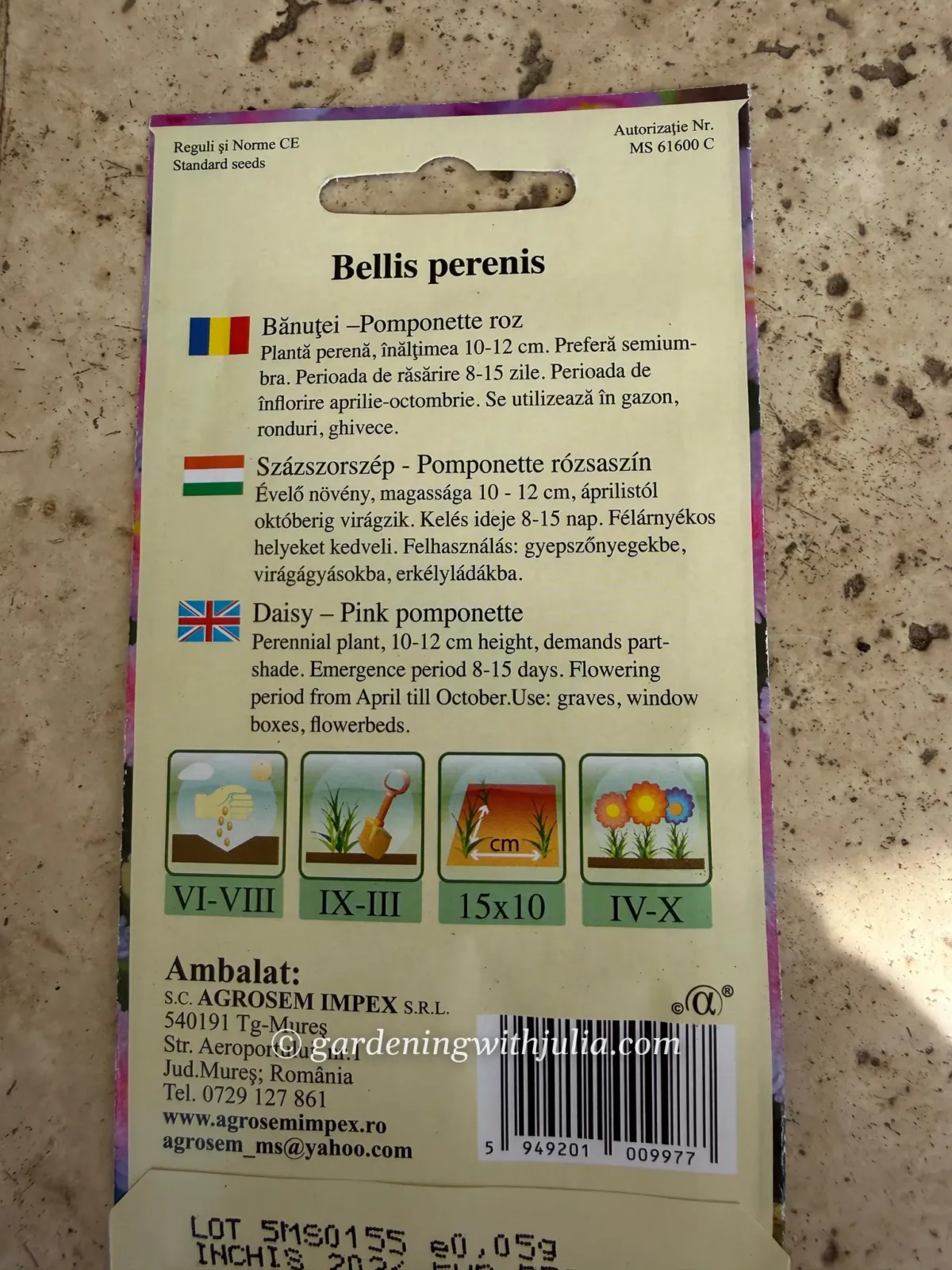
Cell tray and window box in the mini greenhouse · the pink ‘Pomponette’ seed packet · the calendar on the back of the packet
Care: light, cool weather and moist soil
English daisies grow well in sun or part shade, and they especially like morning sun with afternoon shade. They want cool, moist, fertile soil with good drainage. They don’t tolerate drought, and summer heat wears them out. [1, 2]
Watering and soil
In dry weather, water them regularly, especially in pots and window boxes, where the soil dries out quickly. They do best in fertile, humus-rich soil that holds moisture but never stays soggy. [1, 2]
Planting
Move the seedlings to their spot between September and March, 6 × 4 inches (15 × 10 cm) apart, as the packet says. They suit beds, path edges, pots and window boxes, and even lawns. Older clumps can also be divided after flowering. [2]
Spent flowers, seeds and the lawn
Pick off the spent flowers regularly so the plants don’t seed themselves all over. English daisies spread easily by seed and also by short rhizomes, so they often escape from flower beds into the lawn, where they’re considered weeds. Many people still let them bloom in the grass, because they’re among the prettiest lawn “weeds”. [1, 2, 4, 5]
The calendar at a glance
On a phone, swipe the table to the left.
| When | Task | Why |
|---|---|---|
| April | Sowing in trays, in my garden | The seedlings can bloom as early as the fall |
| June–August | Sowing, per the seed packet | Strong plants for next year’s bloom |
| September–March | Planting out, 6 × 4 inches (15 × 10 cm) apart | They root in before winter or early in spring |
| Fall | Spring-sown seedlings bloom | In Bran, still in bloom in October |
| Winter | They stay outdoors, in beds or window boxes | They handle hard frosts |
| April–June | Main bloom; pick off spent flowers | No unwanted self-seeding |
| Summer | Water in dry spells; pull out tired plants | Heat and drought weaken them |
Winter in the mountains
English daisies are very cold-hardy: the RHS rates them H7, hardy even in the harshest continental climates in Europe, and ‘Pomponette’ varieties handle 5°F to −4°F (−15°C to −20°C). They are perennials, but they’re usually grown as biennials. Summer heat and drought are harder on them than winter. [1, 2, 3]
What works for me in Bran
The seedlings I sowed in April are already blooming now, in the fall, here in Bran. They handle the cool fall weather well and open their flowers on mild, sunny days.
In my experience, English daisies grown from your own seed are tougher and better suited to the mountain climate than the ones bought already in bloom.
Pests and diseases
English daisies are generally healthy. Rust can show up on the leaves and, more rarely, root-knot nematodes cause swellings on the roots. [1, 2]
Edible, in moderation
The flowers, which taste mildly bitter, and the young leaves are edible, but only in small amounts. The plant contains saponins, oxalates and tannins: in large amounts it can upset the stomach, and in some people it can irritate the skin. It’s not recommended during pregnancy or breastfeeding. [1]
For me, English daisies are the little flowers that keep the garden alive until the snow settles in, and brighten it up again in spring.