

Seasonal journal · Spring
First tasks after the snow melts
What I do now and what I leave for later in a mountain garden
In the mountains, snow doesn’t retreat all at once. It disappears in patches: first from the sunny spots, then from the middle of the yard and only at the end from the shady corners. The garden reappears piece by piece, and after so many months of waiting the temptation is to start everything on the same day.
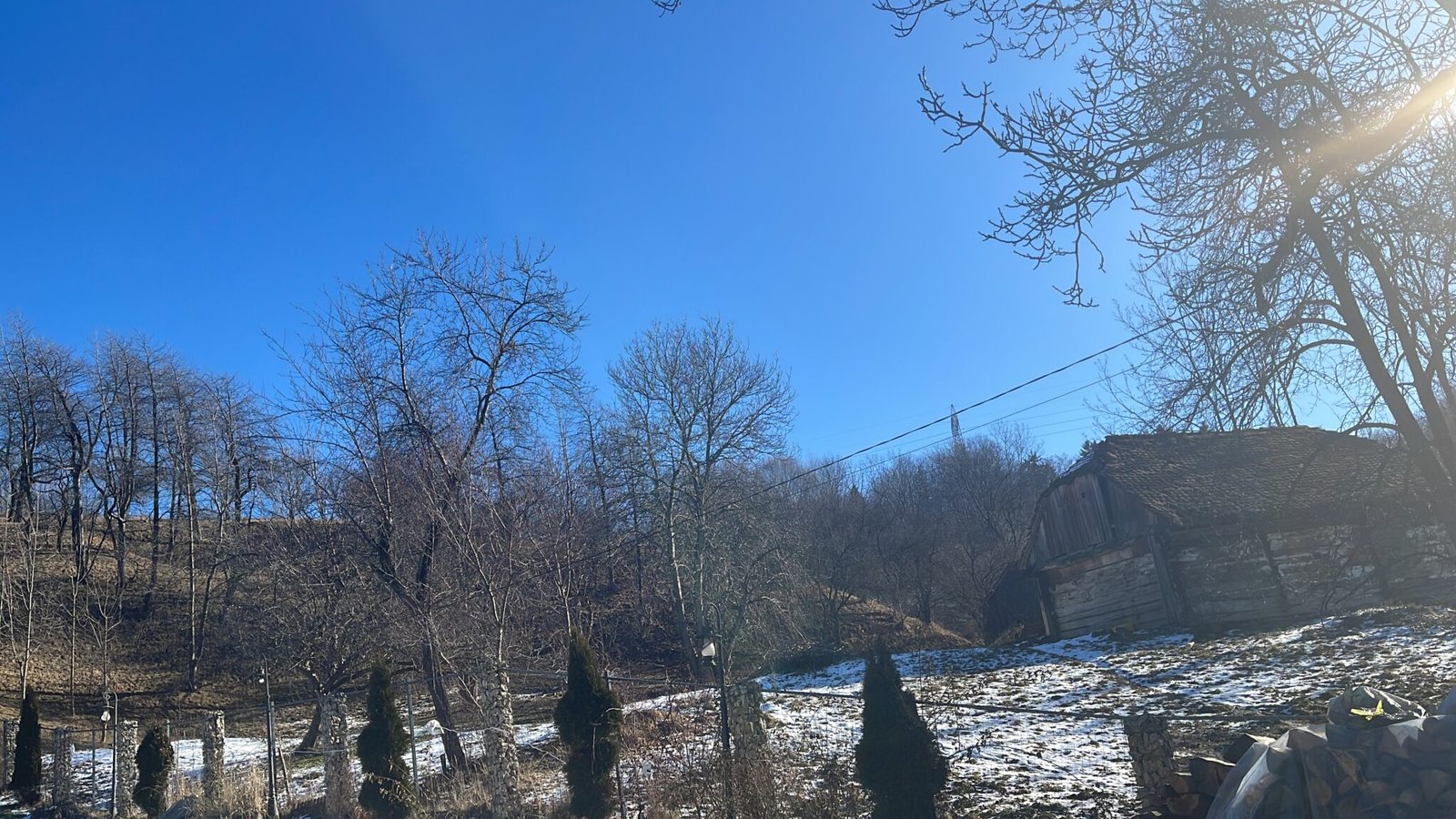
I’ve learned, partly from my mistakes, that the first weeks above freezing call mostly for patience. Snow melting doesn’t mean the soil is ready to work or that the frosts are over. In Bran (Brașov County, Romania), I pay attention to the soil, the plants and the forecast before I look at the date on the calendar.
In this article
01
I stay off waterlogged soil
Soil saturated with meltwater compacts easily if it’s walked on or worked. On heavy soil, the marks of haste can last a long time: water drains more slowly and the roots meet less aerated soil.
The handful-of-soil test is a useful guide. If it sticks hard and molds like modeling clay, I wait. If it starts to crumble easily, it may be closer to the right time. Texture matters, though: clay soil forms clumps in other conditions too. I also check whether it has thawed to the depth I want to work.
Until then, I stay on the paths. A board can spread my weight for a quick job, but it doesn’t make digging or repeated walking on a saturated bed safe. I also hold off on work on soft lawn, where my steps leave deep prints.
02
The first walk through the garden is for observing
I look at the places where water pools, broken branches, leaning stakes and covers moved by the wind. Now you can see problems that may vanish from sight once everything turns green. They’re worth noting or photographing, without trying to fix them all right away.
A plant that looks dead isn’t necessarily lost. Some perennials start late, especially in a cold spot. In the beginning I pulled out plants that just needed more time. Today I try to give them that time.
03
Protection comes off according to the weather
I gradually remove winter protection when conditions allow, preferably on a day without strong sun and drying wind. How I do it depends on the plant and the material. A cover that holds moisture needs airing, while protection still needed against the cold shouldn’t come off just because there was one warm afternoon.
I watch the nighttime lows and keep the protective material within reach for tender plants. I carefully remove packed debris stuck to the stems, but I don’t uncover roots unnecessarily or pull off new shoots hidden among the leaves.
04
Checks at the base of the plants
On young trees and shrubs, I check the bark for signs of rodents. If the damage circles the stem, the problem may be serious and it’s worth asking a specialist. I don’t randomly apply treatments or wound sealants to every injury.
Freeze-thaw cycles can heave young plants, leaving roots exposed. Once the soil has thawed and dried enough, small plants can be carefully reset at the right depth. I fill in soil around the roots without pressing hard or burying the crown. Watering is needed only if the soil moisture calls for it.
05
The lawn and broken branches
After the snow retreats, the lawn may have flattened or discolored patches. Sometimes snow mold is involved, but not every patch has the same cause. When the ground is no longer soft and the grass has dried, a light raking can loosen matted blades and remove debris.
I don’t start with aggressive scarifying. I watch the grass recover and repair gaps only if they remain, at a time suited to germinating the seed mix I use.
Broken branches are removed with clean, sharp tools, using cuts suited to the plant. On trees, I avoid cutting flush with the trunk and keep the swollen area at the base of the branch. For large branches, hanging ones or those above a busy area, the job should be left to a professional.
06
Tasks I don’t rush
The main rose pruning doesn’t have the same date for every group. For repeat bloomers, I watch the buds break and the risk of hard frost; in the mountains, the moment can come in April, but the month isn’t a rule. Once-blooming roses and some climbers have other needs. Broken or dead wood is assessed separately from formative pruning.
I don’t fertilize on snow or on frozen or waterlogged soil. Cold slows root activity, though it doesn’t always stop it completely. Feeding makes sense when the plant can use it and when there’s a real need, following the product and the crop.
I don’t put a thick layer of mulch over cold, wet soil. It can slow down warming and drying. I do keep the protection that vulnerable plants still need and decide spot by spot, without uncovering the whole garden at once.
Tidying up doesn’t have to mean removing every leaf either. I clear problem areas near the base of plants, and healthy debris can stay where it doesn’t smother the shoots. Dry stems and leaves can shelter wildlife; I check them before removing them.
07
What I can prepare without stepping on the beds
- I check the trellises, ties and stakes I can reach from the paths. Repairs that require stepping or digging in soft soil can wait.
- I clean and sharpen my tools. Disinfecting is important especially after cutting diseased tissue, with a suitable product used as directed.
- I get clean containers, potting mix and space ready for seedlings. I tie sowing dates to the species and to a realistic time for planting out.
- I take stock of seeds and supplies. I don’t put a plant on the replacement list just because it hasn’t started yet.
- I check the parts of the watering system, but I only put it back into use once the frosts are over.
08
Spring also begins where we can’t see it
As the soil warms and temperatures become favorable, the activity of the organisms in it picks up. Organic matter keeps breaking down at the pace of local conditions.
Snowdrops and crocuses are among the signs I look forward to most. The reserves in their bulbs and, for crocuses, their corms help them start early, sometimes even among patches of snow. Their arrival signals the change of season, not the end of all frosts.
In all my years here, this is the lesson I keep repeating: spring in the mountains comes, retreats and comes back. A warm day makes me happy, but it’s no longer a reason to start every task.
Where do you start in spring?
What’s the first task you do after the snow melts? Have you ever lost a plant because you stepped in too early? I’d love to talk about it in the comments.
Further reading: RHS — growing and pruning roses · University of Minnesota Extension — spring lawn care · RHS — waterlogging in the soil.