
Plant profile · My garden in Bran, Romania
Phlox
Garden phlox
Phlox paniculata
Summer color among the roses
| ☼ | Light | Sun / part shade |
| ❄ | Hardiness | USDA 4–8 |
| ⌁ | Water | Moist, well-drained soil |
| ♧ | Propagation | Division in spring |
| ✺ | Bloom | July–November in Bran |
| ↕ | Height | 60–150 cm (2–5 ft) in Bran |
| ✦ | Pollinators | Bees and butterflies |
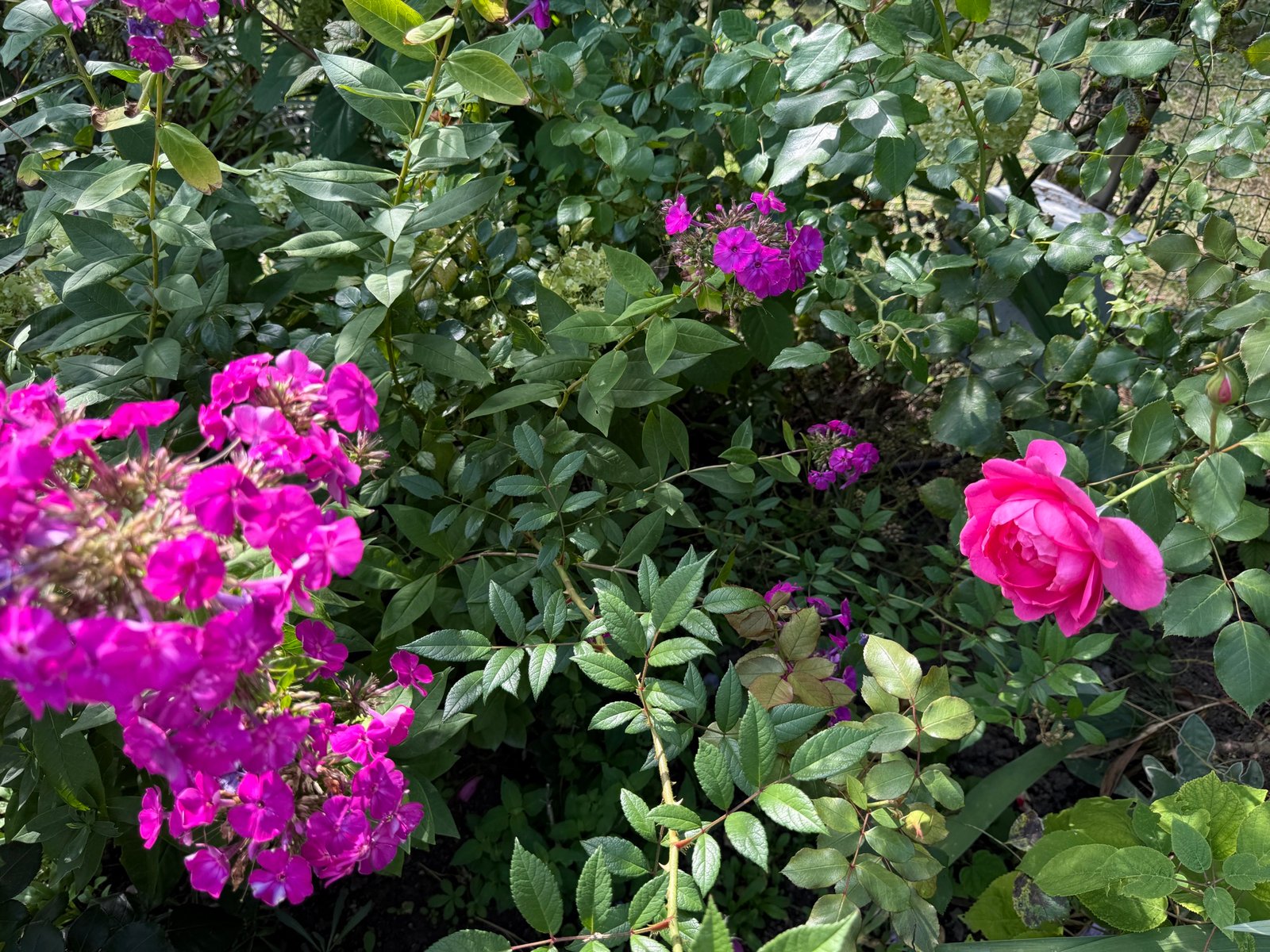
In my garden, tall phlox grows among the roses as a companion plant, with pink, magenta and lilac flowers gathered in clusters at the top of the stems.
In short
A tall perennial, about 60–120 cm (2–4 ft), with clusters of flowers at the top of the stems in summer. It dies back to the ground in winter and comes up again from the root in spring.
What keeps it healthy: moist, well-drained soil, air between the stems and water in dry spells. Powdery mildew is the problem to watch for.
Safety: generally considered non-toxic to dogs and cats, but it isn’t an edible or medicinal plant.
The garden phlox varieties in my garden
The names kept in my plant orders fill out the story of my garden. They’re phlox varieties or trade names.
- Flame Lilac
- Flame Purple
- Cool Water
- Zenobia
- Rosa Pastell
- Autumn Joy
- Cleopatra
- Purple Paradise
- Rainbow Dancer
- Younique Bicolor
And creeping phlox
My collection also includes Phlox subulata: Fabulous Rose, Candy Stripes and Scarlet Flame. I’m keeping it separate from garden phlox in this overview; it will get its own profile.
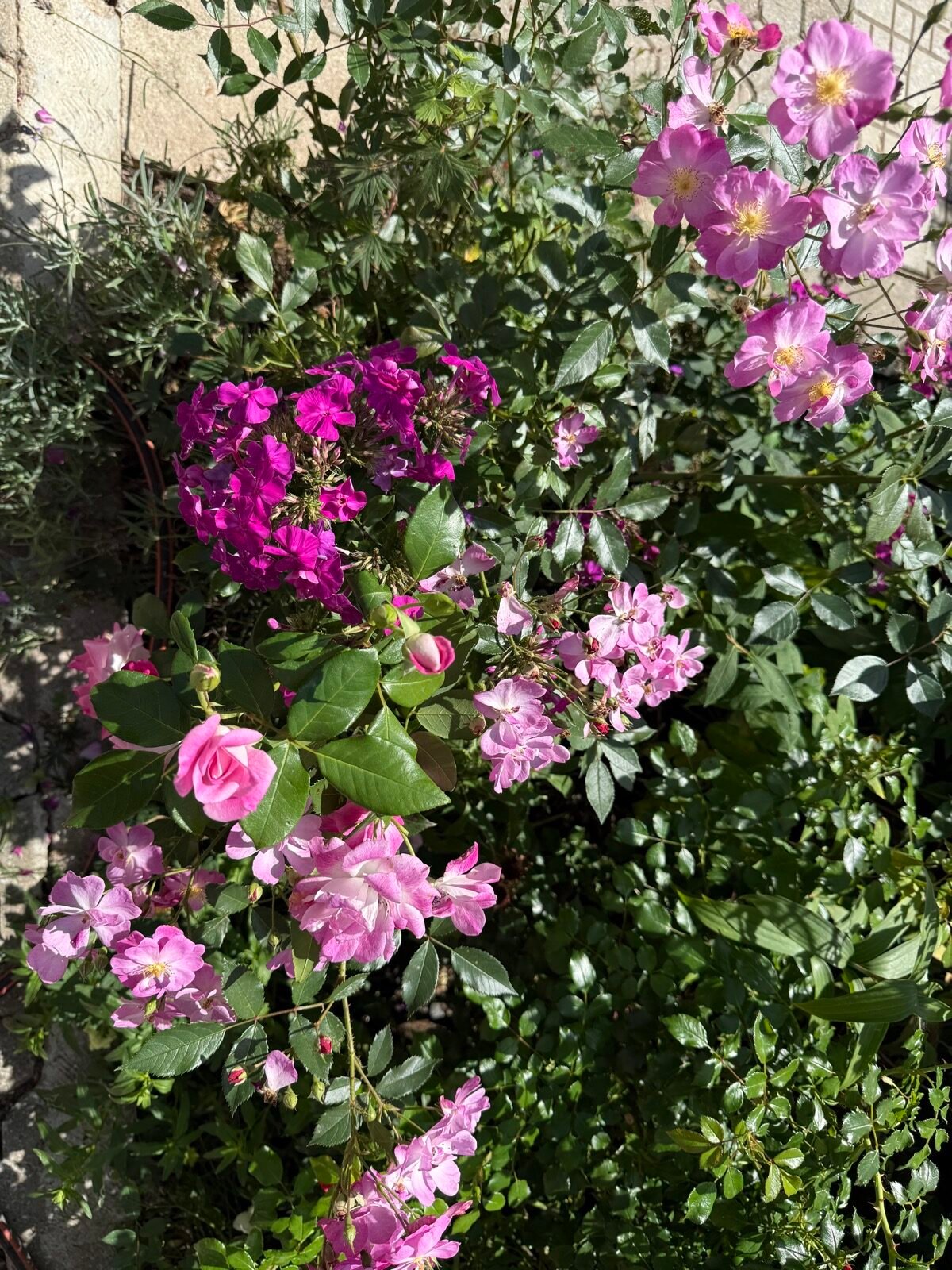
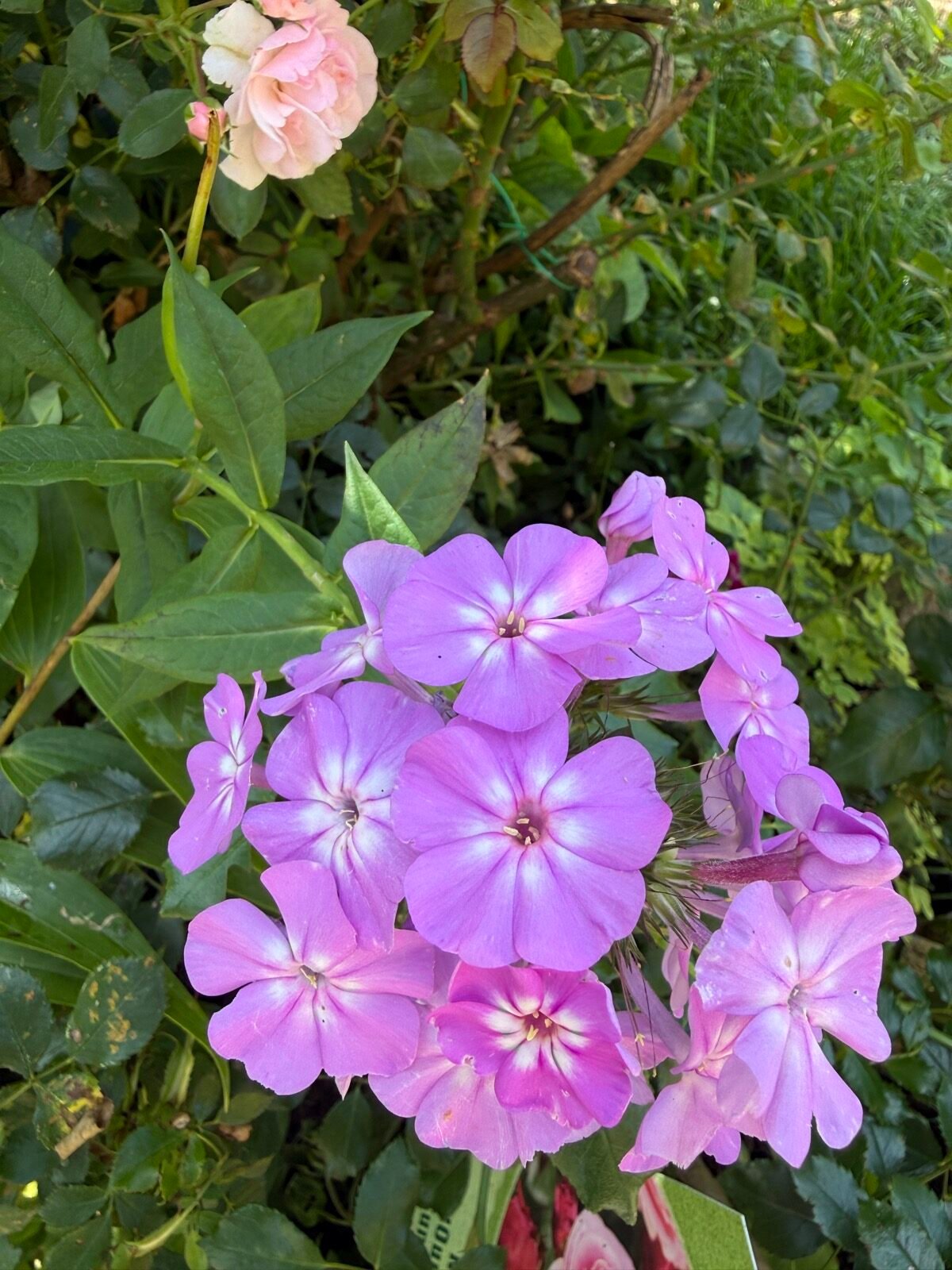
Photos from my garden in Bran. Tap a photo to open it on its own.
Quick facts
General data about the plant is kept separate from my observations in Bran.
| Item | From sources | Bran observations |
|---|---|---|
| Identification | Phlox paniculata | The varieties are listed above |
| Plant type | Clump-forming herbaceous perennial; the top growth dies back in winter [1] | Comes back after winter: always |
| Height | Many forms reach about 60–120 cm (2–4 ft) | Height measured in the garden: 60–150 cm (2–5 ft) |
| Bloom | Summer, sometimes into fall, depending on the cultivar and conditions [1, 2] | Start and end in Bran: from July to November |
| Cold hardiness | Roughly USDA zones 4–8 | The garden is in zone 6a/6b. Overwintering: without protection |
| Light and soil | Sun or bright part shade; fertile, moist, well-drained soil [1, 3] | Spot in the garden: sun and part shade |
| Safety | Generally considered non-toxic to dogs and cats | — |
Care and seasonal rhythm
Water at the roots and air between the stems
Tall phlox prefers fertile, moist, well-drained soil, in sun or bright part shade. Don’t crowd it between more vigorous neighbors. In dry spells, I water the soil and avoid repeatedly wetting the leaves. Tall stems loaded with flower heads may need support in a windy spot. [1, 3]
Blooming and powdery mildew
If I cut off spent flowers, new ones appear on the side shoots; for me it reblooms. A whitish dust on the leaves can mean powdery mildew; I check the plant and apply a treatment. Good airflow through the clump and avoiding drought stress are useful care measures. [1, 3]
Cutting back and dividing the clump
Completely dry stems can be removed once the plant goes dormant or toward the end of winter, before new growth. If they were diseased, I take them out of the bed. For clumps that are too big, spring division is a practical option in a cold garden, after the thaw and before strong growth. [1, 3]
Propagation
To keep a variety’s color, I divide the clump, as described above. Seedlings that come up on their own can have different colors from the parent plant.
Guide calendar for Bran
| Season | What I keep an eye on |
|---|---|
| Spring | I check the new shoots; I divide clumps only if needed and the soil allows. |
| Summer | I keep an eye on watering, airflow, support and spent flower heads. |
| Fall | I note the colors and bloom period; I remove diseased debris. |
| Winter | I keep the spot marked; I don’t mistake the top growth going dormant for losing the plant. |
My experience — Bran, Romania
| Observation | Note |
|---|---|
| Spot in the garden (exposure, soil) | Sunny, clay soil |
| Where the plant came from | Plant-shop.ro |
| Planting period | Planted gradually, between 2021 and 2026 |
| Bloom | Blooms in flushes, from July to November |
| How it got through winter | Without protection |
| Powdery mildew seen, treatments | Yes; I treated it with Ortiva Top |
Ortiva Top is mentioned as a treatment used in my garden, not as a recommendation to apply it. Any use must follow the label and the product’s current authorization.
Biodiversity and safety
The flowers attract pollinators. Tall phlox is generally considered non-toxic to dogs and cats, but I don’t use it as food or as a remedy.
Garden phlox, roses and color until late in the season.