
Planting bulbs in the mountains
Fall planting, summer flowers and patience in the face of late frosts
In the mountains, the bulbs I grow fall, for me, into two big categories: those planted in fall for the following spring, and the frost-tender ones I bring into the garden once the weather warms up. Each category has its own rhythm, and the calendar is only the start of the decision.
In everyday language we often call them all “bulbs,” even though dahlias have tuberous roots and gladioli have corms. The difference matters when choosing the planting depth and how to store them over winter. [1]
Bulbs planted in fall
Daffodils, tulips and crocuses go into the ground in fall. In my garden, many of these plantings happen in October, but I don’t wait for the same date for every species. Daffodils and crocuses can be planted earlier, while tulips prefer soil that has already cooled. What matters is that the soil can be worked, isn’t waterlogged and allows rooting. [1]
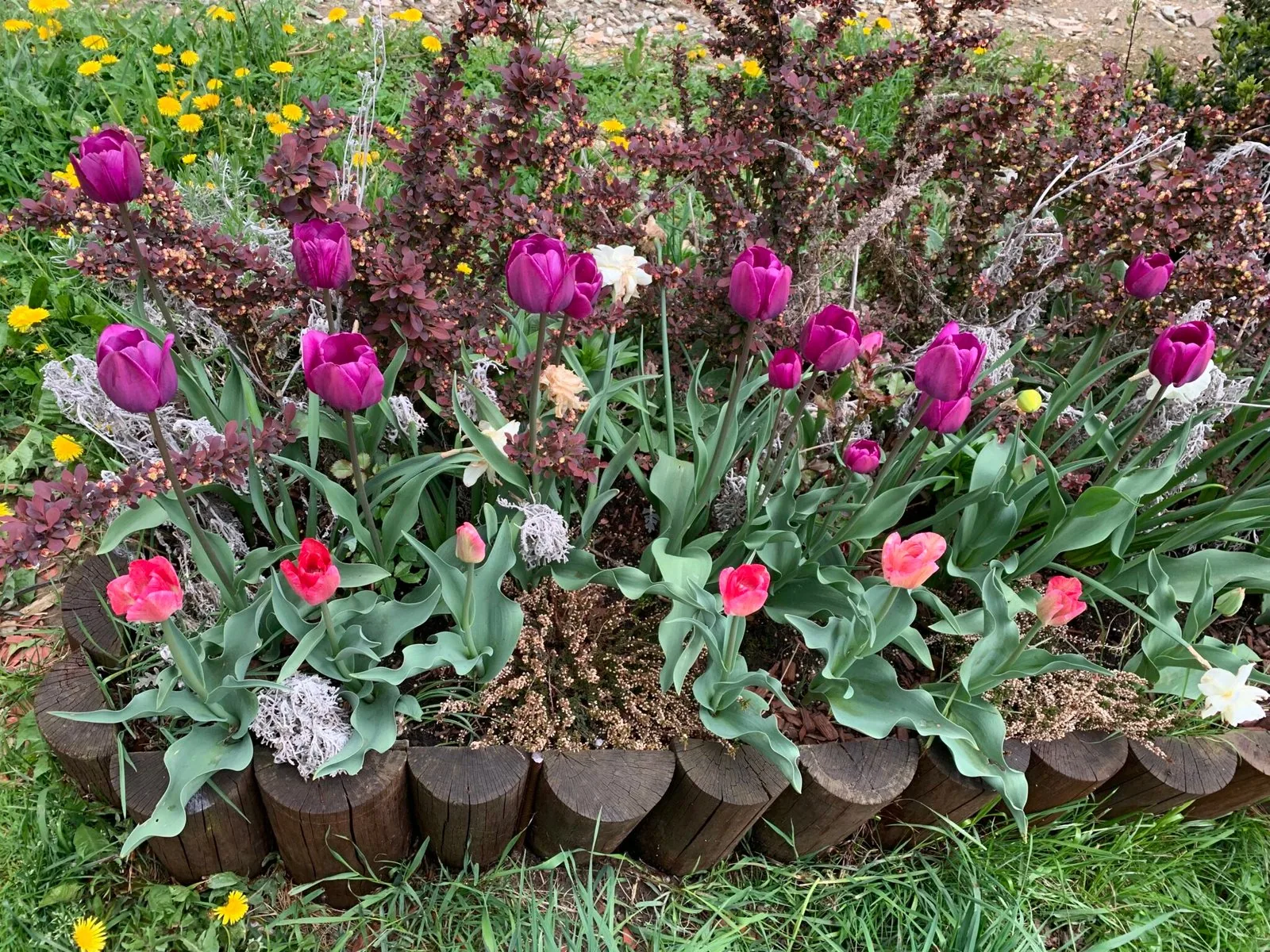
Advice from countries with milder winters has to be read carefully, though; a very late planting can find the soil in Bran (Brașov County, Romania) already frozen.
Depth and drainage
I choose spots where water doesn’t stand. Planting depth doesn’t make up for poor drainage in my garden, and in heavy soil I don’t bury bulbs deeper and deeper just out of fear of frost.
For many bulbs, the general guideline is a hole two to three times as deep as the bulb is tall, measured to its base. There are exceptions (peonies), so the species’ instructions on the package take priority. The bulbs you plant should be firm, without soft or rotten spots. [1]
When planting, it’s worth marking where each group goes. In spring, when the first leaves appear, a simple label helps more than the memory of a fall afternoon.
Peonies are planted close to the surface
Herbaceous peonies aren’t bulbs and don’t follow the two-to-three-times-the-bulb’s-height rule. When planting a bare-root division, I set the buds — the “eyes” — facing up and cover them with no more than about 2.5 cm (1 in) of soil. If they’re planted deeper, the plant makes leaves but may bloom poorly or not at all. I choose a sunny spot with fertile, well-drained soil, then water so the soil settles around the roots. [4]
In Bran’s cold climate I don’t make up for frost by burying the crown deeper, and I don’t pile a thick layer of mulch over the buds. The rule applies to herbaceous and intersectional peonies; grafted tree peonies have different planting needs. [4][5]
May is a guide, not a guarantee
Frost-tender dahlias and gladioli are part of the spring planting plan. For dahlias that have already started growing, the wait has to continue until the risk of frost is over; in a cold year, that can mean later than May. Starting them in pots, under cover and in the light, allows an earlier start without exposing the shoots to cold. [2]
Plants grown under cover need gradual hardening off before moving outside for good. A warm day says nothing certain about the following night, especially in the mountains. With gladioli, check the type you’re growing and the advice for corms, without automatically applying the dahlia planting method.
After flowering and before winter
With spring bulbs, the leaves are left to yellow naturally. They rebuild the reserves for the next season; I don’t cut them while they’re still green just to tidy the bed. [3]
For dahlias in a garden with harsh winters, storing them under cover is the cautious option. The tuberous roots are lifted before the soil freezes, often after the first frost has hit the foliage. They’re dried off and stored in a cool, frost-free place, checking regularly for rot or excessive drying. Gladioli have their own rhythm of ripening and lifting; I don’t wait for the leaves to blacken as a rule common to all plants. [2]
When the cold comes back
Tender shoots can be temporarily protected with frost cloth, and pots can be moved under cover. Mulch helps the soil, but it isn’t piled over green leaves and shoots to protect them from frost.
For me, the most beautiful part is this link between the seasons: what I set in the ground on a cold fall day can become the first joy of spring. Patience doesn’t mean pointless delay, but choosing the moment when the plant has the best chance.